PodStreet Weekly
 Velocity Meter
 CX-O
 Cult of Brands
 Growth Glider
 Dear Brain
Brands Are Now Selling Transformation, Not Products
Businesses are moving beyond selling products and services to guiding customers toward lasting personal change. This shift redefines value, pricing, and business models.
The brands truly building for tomorrow are prioritizing transformation over transaction, not just for their customers, but for their own operating models.
📊 10 episodes across 9 podcasts
⏱ 475 minutes of intelligence analyzed
🎙 Featuring: John DiJulius (The DiJulius Group), B. Joseph Pine II (Strategic Horizons LLP), Joe Pine (Author and Consultant)
|
The Big Shift
The most insightful brands are recognizing that true competitive advantage isn't just about optimizing customer experiences; it's about engineering customer transformations. This isn't a mere philosophical shift but a strategic imperative that redefines value, pricing, and the very structure of a business model.
What's happening: The concept of a "Transformation Economy" is emerging as the fifth stage of economic value, moving beyond commodities, goods, services, and experiences. In this stage, businesses guide customers to achieve lasting personal change and aspirations. This is not about selling a product or service; it's about selling an outcome, a profound shift in being.
"The greatest economic value lies in helping customers become who they want to be."
— B. Joseph Pine II, Author, Speaker, Management Advisor, Co-founder of Strategic Horizons LLP on Customer Service Revolution
Why it matters for brands: This shift impacts everything from product development to pricing strategy. We're seeing consulting firms like McKinsey and even OpenAI move towards outcome-based pricing, where clients only pay for demonstrated results rather than just services rendered. This forces brands to deeply understand their customers' desired end-state and actively design pathways to achieve it.
The strategic imperative: It demands a re-evaluation of how brand loyalty is built. It moves beyond transactional points (as explored by Telstra Plus) to fostering deep, emotional connections by literally changing customers' lives for the better. This isn't just for "wellness" brands; as B. Joseph Pine II stated, "Any business that's in the business of helping people be healthy, wealthy or wise is in the transformation business." This paradigm enables new business models, pricing structures, and a defensible moat built on profound customer impact.
The Rundown
① TV Advertising Unlocks Performance in Social.
DTC brand Jones Road Beauty, initially built on paid social, found that integrating TV advertising led to a significant "halo effect," boosting Meta ad performance and Google brand searches, challenging the traditional view that TV is only for established giants. (Cody Plofker on Limited Supply)
→ Strategic Takeaway: For DTC brands hitting diminishing returns on social, consider TV not as a replacement but as an accelerator for existing channels, driving new audience reach and improving overall digital ad efficiency.
② Real-time AI for Customer Insight.
InStore AI leverages AI to analyze millions of in-store customer and employee conversations, uncovering actionable insights that traditional surveys miss, such as why coffee sales were declining due to cold temperatures. (Kevin Farley on Creating Superfans)
→ Actionable Insight: Brands should look beyond traditional feedback mechanisms and explore conversational AI to tap into unstructured, real-time customer and employee interactions to identify previously hidden operational and product issues.
③ Hardware Development Costs Are Dramatically Underestimated.
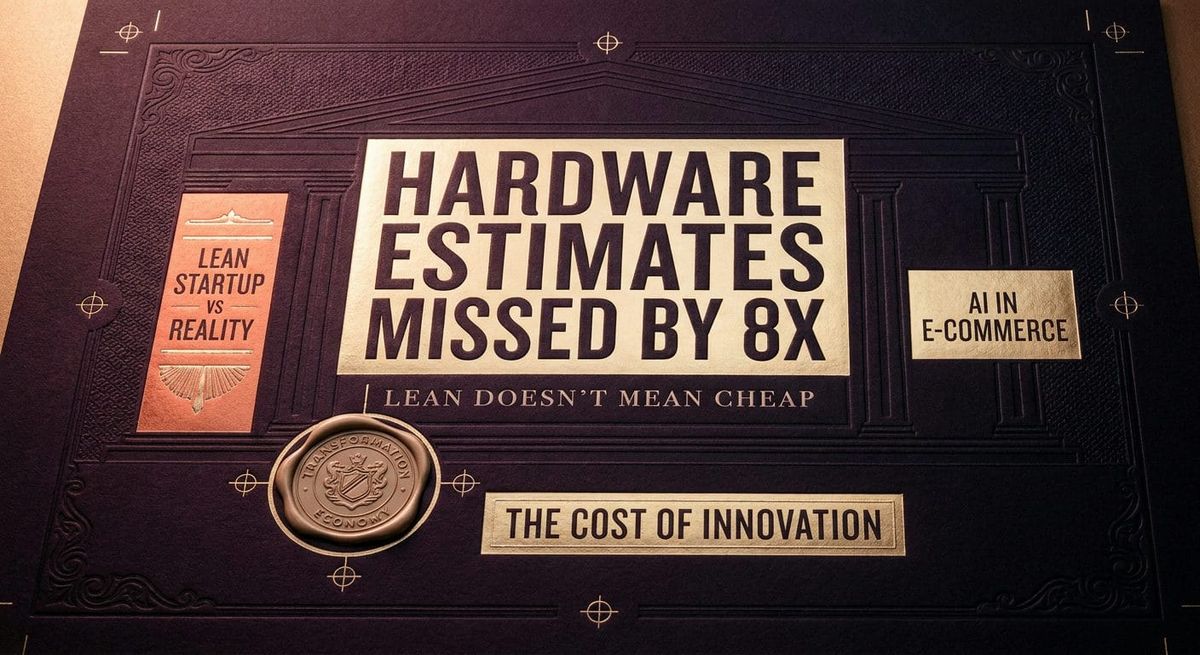
Christopher Francis, founder of Home Plunge, revealed that initial hardware development cost estimates were off by an order of magnitude (quoted $60K, spent $500K), highlighting a critical risk for solo founders in physical products. (Christopher Francis on The Operators)
→ Founder Foresight: When planning for physical product launches, multiply initial development cost estimates by 5-10x to build a more realistic budget and contingency, particularly for solo entrepreneurs.
④ Permanent Sales Drive High-Value Conversions.
For high Average Order Value (AOV) products with long consideration periods, adopting a "permanent sale" strategy can be counter-intuitively effective, making customers feel like they're buying at the 'right time' despite constant discounts. (Mike on The Operators)
→ Pricing Power: For infrequent, high-ticket purchases, a consistent discount framing can reduce purchase hesitancy and boost conversion by creating a perpetual sense of value, rather than waiting for seasonal sales.
⑤ Accurate Attribution Demands Data Connection.
A client account suffering from growth stagnation and inaccurate metrics saw a 20-25% CAC reduction in one week by cleaning up messy attribution data, connecting directly to source platforms rather than relying on HubSpot. (Thomas McNaught on Perpetual Traffic)
→ Data Discipline: Ensure your attribution systems directly integrate with primary ad platforms to avoid data discrepancies and accurately measure CAC, enabling faster, more effective budget reallocation and optimization.
Signal Board
🔥 Heating Up
• Transformation Economy: Businesses are increasingly focused on helping customers achieve lasting personal change, redefining value beyond traditional services. (B. Joseph Pine II on Customer Service Revolution)
• TV in Marketing Mix 🆕: Brands like Jones Road Beauty are seeing significant "halo effects" on digital performance by integrating TV, debunking myths about its accessibility for DTC. (Cody Plofker on Limited Supply)
• AI for customer service (email/SMS automation): Solo founders are leveraging AI to scale customer service operations without increasing headcount, balancing efficiency with customer expectations. (Christopher Francis on The Operators)
👀 On Watch
• AI-native company building: Experienced operators are launching e-commerce brands with minimal staff, aiming for nine-figure revenue by leveraging AI for operational efficiency. (Moiz Ali, DC, Nik Sharma on The Operators)
• Fashion model digital likeness ownership: The critical need for models to own their digital likeness is highlighted as agencies offer little protection, impacting career longevity in the AI era. (Nick Knight on The Business of Fashion Podcast)
• HSA marketplaces: An overlooked high-volume sales channel for health-related products, with potential for $1M+ in sales with minimal setup effort. (Sean on The Operators)
❄️ Cooling Off
• Hyper-local state-specific ad targeting: Eliminating state-specific targeting in Meta ads for a geographically relevant product led to a 20% CAC reduction, challenging intuitive optimization. (Thomas McNaught on Perpetual Traffic)
• Long video ads (10+ minutes): Creatives with extremely low completion rates (0.01% for 10-minute videos) are proven ineffective, signaling a need for shorter, impactful content. (Thomas McNaught on Perpetual Traffic)
• Frictionless customer journeys: The concept of a "frictionless" customer experience is being re-evaluated, with arguments that intentional friction can enhance engagement and basket size. (Kevin Farley on Creating Superfans)
The Debate
The traditional approach to scaling a new venture—plan meticulously, raise capital, build a large team—is being challenged by a leaner, AI-enabled philosophy.
🐂 The Case For a Lean, Bootstrapped Approach: Experienced operators are deliberately launching new e-commerce brands with minimal initial investment ($500,000) and a tiny team (aiming for nine figures with five people), leveraging AI to minimize operational expenses. This approach prioritizes unit economics and a disciplined, mercenary mindset, ready to shut down if targets aren't met. Mike, Co-host / Operator, underscored, "My strong opinion is that we need to set a constraint of we're going to grow as fast as we can within this constraint." (The Operators)
🐻 The Case Against Over-Optimizing Lean Early On: While not a direct counter, the stark reality of unexpected costs, particularly in physical product development, highlights the risks of underestimating the capital required for certain ventures. Christopher Francis, Founder & CEO of Home Plunge, shared his experience of being quoted $60,000 for product development only to spend half a million dollars two years later. This suggests that while lean operations are laudable, some core business functions inherently demand significant upfront capital. (The Operators)
The Strategist's Take: The ability to scale lean depends heavily on the nature of the business and the leadership's experience; while AI and tooling enable unprecedented efficiency, some fundamental costs, especially in hardware, remain stubbornly high. Plan for the lean, but budget for the unexpected.
The Bottom Line
The future of brand building is less about selling products and more about orchestrating customer transformations, leveraging data and AI to build emotional loyalty and defensible market share.
Channel Check
📊 Marketing & Analytics
Brands are moving beyond annual marketing mix modeling to "always-on" systems, updating models monthly or quarterly to adapt to dynamic channels. The halo effect of top-of-funnel tactics, particularly TV advertising (Cody Plofker on Limited Supply), is proving crucial for boosting digital channel performance, while rigorous data attribution (Thomas McNaught on Perpetual Traffic) is essential for accurate CAC measurement.
🛒 E-commerce & Retail
The strategic use of Amazon is evolving; rather than direct sales, it's becoming a tool to establish market price anchors and social proof (reviews) while driving conversions on owned channels (Justin Jefferson on DTC Podcast). In physical retail, AI is now crucial for analyzing real-time customer conversations to uncover insights that traditional surveys miss (Kevin Farley on Creating Superfans), particularly regarding employee-customer friction.
💡 Innovation & AI
AI is not just for efficiency; it's enabling new economic models (Transformation Economy, B. Joseph Pine II on Customer Service Revolution) and allowing experienced operators to build multi-million dollar brands with minimal headcount (Moiz Ali, DC, Nik Sharma on The Operators). Beyond utility, ethical considerations around data centers and the critical need for individuals, like fashion models, to own their digital likeness are rising in prominence (Nick Knight on The Business of Fashion Podcast).
Quick Appendix
Customer Service Revolution: "267: The Transformation Economy: The Next Evolution of Customer Experience" · 39 min · Featuring John DiJulius ▶ Listen · Apple Podcasts
For the CMO: Understand how to shift your brand's value proposition from service delivery to lasting personal change, driving deeper loyalty and new revenue models.
The Operators: "Building Solo Past $1M in Only Year One: Help an Operator Out" · 74 min · Featuring Christopher Francis ▶ Listen
For the DTC Founder: Learn how a solo founder scaled a physical product business, including strategic advice on B2B channels and balancing manual customer service with AI, all while navigating significant hardware development costs.
Creating Superfans: "If Your Stores Could Talk: Turning Conversations Into Customer Insight with Kevin Farley" · 51 min · Featuring Kevin Farley ▶ Listen · Apple Podcasts
For the Retail Executive: Discover how AI can analyze in-store conversations to uncover hidden customer insights and employee friction points, moving beyond traditional surveys to drive operational improvements and reduce turnover.
Perpetual Traffic: "Bad Data and 10+ Minute Video Ads Were Killing This Account - Here's the Fix" · 42 min · Featuring Ralph Burns ▶ Listen · Apple Podcasts
For the Performance Marketing Lead: Dive into a case study on diagnosing and fixing growth stagnation by cleaning attribution data, optimizing video ad length, and consolidating campaigns for a 20-25% CAC reduction.
The Operators: "Every Step to Start an Ecommerce Business Revealed: Operators Build (E1)" · 78 min · Featuring Moiz Ali ▶ Listen
For the Ambitious Founder: Follow a new series detailing the launch of a supplement brand with a $500k investment, focusing on lean operations, AI integration, and critical unit economics for modern e-commerce success.
Let's Talk Loyalty: "Telstra Plus: Moving Beyond Points to Create Emotional Loyalty and Customer Value (#799)" · 41 min · Featuring Tomas Warden ▶ Listen · Apple Podcasts
For the Loyalty Program Manager: Explore how Telstra evolved its loyalty program from transactional points to emotional loyalty, integrating it into digital customer success and using AI for personalization and churn prediction.
DTC Podcast: "What Brands Really Spend on Marketing: 15% at $10M, 2% at $1B | Harness the Halo 1/6" · 36 min · Featuring Justin Jefferson ▶ Listen · Apple Podcasts
For the Brand Strategist: Understand how marketing spend percentages shift with revenue scale, the importance of "always-on" marketing mix modeling, and diversifying ad spend beyond bottom-funnel tactics.
Ecommerce Playbook: Numbers, Struggles & Growth: "Ecommerce Growth: The 3-Pillar Framework We Use" · 31 min · Featuring Luke Austin ▶ Listen · Apple Podcasts
For the E-commerce Leader: Learn a three-pillar framework for growth focusing on a single source of truth for data, shared definitions of success, and relentless execution for sustainable e-commerce growth.
The Business of Fashion Podcast: "Nick Knight Is Building His Own AI" · 39 min · Featuring Nick Knight ▶ Listen · Apple Podcasts
For the Creative Director: Gain insights from a visionary on building proprietary AI datasets for unique creative output, the rebranding of the metaverse, and the ethical implications of AI for artists and models.
Limited Supply: "S17 E7: The TV Playbook That Unlocked Jones Road's Meta Performance" · 44 min · Featuring Cody Plofker ▶ Listen · Apple Podcasts
For the Performance Marketing Leader: Hear how Jones Road Beauty successfully integrated TV advertising to boost Meta performance and Google brand search, achieving significant growth and challenging conventional wisdom on channel mix.
Topics