PodStreet Weekly
 Velocity Meter
 CX-O
CX-O Cult of Brands
 Growth Glider
 Dear Brain
GOVX’s 60/40 Split Signals the End of Performance-Only Marketing
Leading CMOs are moving beyond short-term performance marketing and tactical AI adoption, advocating for radical data integration and long-term brand investment.
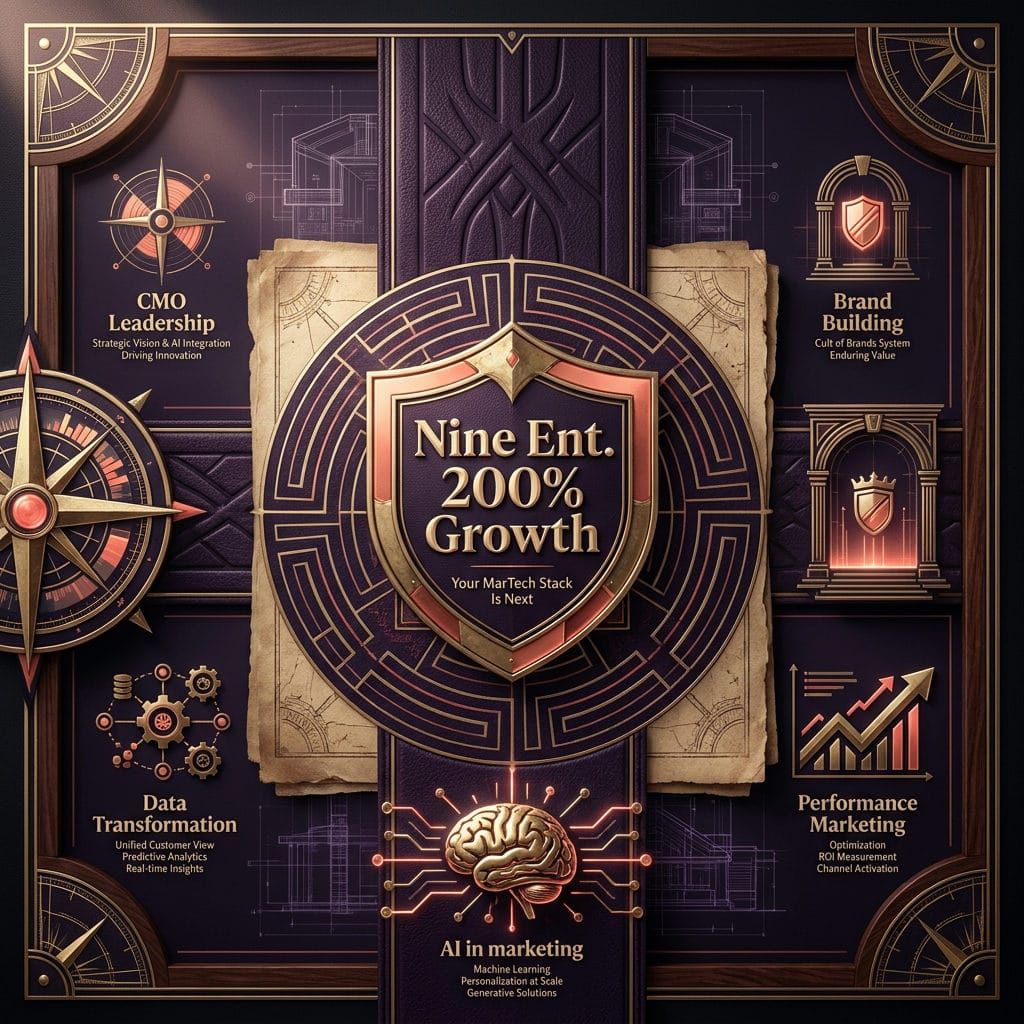
The imperative for CMOs is no longer just to articulate marketing’s value, but to architect the organizational bravery and data-driven conviction required to build long-term enterprise value in an AI-accelerated world.
📊 10 episodes across 9 podcasts
⏱ 367 minutes of intelligence analyzed
🎙 Featuring: Mark Jones, Suzie Cardwell, Susie, Laura Jones, Greg Kihlström, Greg Heinz, James Hurman, Melissa Laurie, Michael Stelzner, Jerry Potter, Marc, Vassilis, Phill Agnew, Leslie John, Aaron Pelander, Elena Jasper, Angela Voss, Rob DeMars, Drew Neisser, Todd Henry, Conor Byrne
|
One Big Thing
The prevailing sentiment among leading CMOs is that sustained growth now hinges on a foundational shift towards radical data integration and long-term brand investment, moving definitively beyond short-term performance marketing and tactical AI adoption. Instacart’s Laura Jones highlighted her five-year journey from a logo to a unified brand strategy, emphasizing that effective marketing creates its own weather, transcending singular events like the Super Bowl to build enduring resonance. This perspective aligns with James Hurman's assertion that advertising's true job is to bias future demand, not just capture immediate sales, a concept he argues has been misunderstood for decades despite conversion rates remaining static for a century.
What’s changing is the C-suite’s willingness to embrace this long-term view, often catalyzed by hitting performance plateaus. GOVX Chief Brand Officer Aaron Pelander detailed their strategic pivot from performance-only to a 60/40 brand and performance split, securing executive buy-in by measuring leading indicators like direct traffic and share of search. This signals a maturation in how marketing value is articulated and perceived at the executive level, demanding that CMOs not just manage campaigns but architect enterprise-wide data strategies. Nine Entertainment's Suzie Cardwell illustrated this with her company's 200% growth in data-driven advertising revenue, achieved by unifying siloed customer data for a single view, demonstrating that the future of marketing leadership is deeply intertwined with data transformation and the ability to connect brand influence directly to the P&L.
"The more money we put into Facebook or to Google to retarget people that already knew about us, it just didn't lead to any consistent growth."
— Aaron Pelander, Chief Brand Officer at GOVX
This confluence of data-driven infrastructure and long-term brand strategy is what positions marketing as a true growth engine, demanding that CMOs lead with enterprise-level vision, capital allocation acumen, and the bravery to challenge outdated mental models of advertising effectiveness.
The Rundown
① Your Brand Isn't Just for Humans Anymore.
Brands need to be "machine readable and human lovable," signaling a new imperative for consistency and distinctiveness across both human perception and AI interpretation. (James Hurman on The WARC Podcast)
→ The Implication for CMOs: CMOs must ensure their brand guidelines extend to how AI agents interpret and interact with brand assets, optimizing for both human emotional connection and machine efficiency.
② Unifying Customer Data Unlocks Exponential Revenue.
Nine Entertainment achieved over 200% growth in data-driven advertising revenue by creating a single customer view from previously siloed data across its diverse media assets. (Suzie Cardwell on The CMO Show)
→ The Implication for CMOs: Leading a comprehensive data transformation effort to unify customer data is now a direct path to significant revenue generation, requiring cross-functional leadership and a clear business case.
③ AI Amplifies Human Creativity, It Doesn't Replace It.
Optimizely's rebrand into an AI-first platform strategically commissioned a human artist for illustrations to ensure unique visual identity, reinforcing that "uniquely human moments are worth it." (Greg Heinz on The Agile Brand with Greg Kihlström®: Expert Mode Marketing Technology, AI, & CX)
→ The Implication for CMOs: Strategic AI adoption means integrating it to scale human-led efforts and enhance differentiation, rather than solely using it for cost-cutting or automation that commoditizes brand expression.
④ Leaders Who Reveal Weaknesses Build Trust and Motivation.
Research shows that leaders who reveal a work-in-progress weakness are perceived as more trustworthy and inspire greater team motivation, rather than appearing less competent. (Leslie John on Nudge)
→ The Implication for CMOs: Cultivating transparent leadership, where leaders selectively share their own areas for growth, can foster a more motivated and trusting marketing organization, improving team performance and psychological safety.
⑤ Short-Term Performance Marketing Leads to Growth Plateaus.
After hitting a growth plateau with performance-only marketing, GOVX successfully pivoted to a 60/40 brand and performance strategy, leading to renewed growth and unexpected B2B benefits from brand investment. (Aaron Pelander on The Marketing Architects)
→ The Implication for CMOs: CMOs must strategically balance short-term performance with long-term brand building, recognizing that an over-reliance on performance channels will eventually cap growth and limit enterprise value.
Signal Board
🔥 Heating Up
• Instacart: The brand transformed from a logo to a unified strategy under CMO Laura Jones, demonstrating full-funnel marketing success and board alignment. (Laura Jones on The WARC Podcast)
• 60/40 split between brand building and activation: Adopted by GOVX after hitting a growth plateau with performance-only marketing, this strategy led to renewed growth. (Aaron Pelander on The Marketing Architects)
• First-party data leveraging: Nine Entertainment's strategy for targeted advertising using authenticated consumer data led to significant revenue growth. (Suzie Cardwell on The CMO Show)
👀 On Watch
• 🆕Tracksuit: Co-founder James Hurman advocates for simplifying marketing science to bridge the marketing-finance language gap and validate brand investment. (James Hurman on That's What I Call Marketing)
• 🆕Todd Henry: Author of "The Brave Habit" emphasizes developing bravery as a leadership habit and understanding individual team motivations. (Todd Henry on Renegade Marketers Unite)
• 🆕Future Demand (concept): James Hurman's framework distinguishing between biasing future demand and capturing current demand, crucial for brand growth. (James Hurman on The WARC Podcast)
🧊 Cooling Off
• $700 billion MarTech delusion: The industry often relies on inaccurate data, leading to ineffective targeting and questioning the efficacy of massive MarTech investments. (Marc on Sleeping Barber - A Marketing Podcast)
• AI assistant credibility gap in shopping recommendations: AI assistants rank lowest in consumer trust for shopping recommendations, below friends, family, and online reviews. (Marc on Sleeping Barber - A Marketing Podcast)
• Precise attribution quest: Overrated and often inefficient, as real-world customer journeys involve many touchpoints, making exact attribution models less valuable than perceived. (Aaron Pelander on The Marketing Architects)
The Tension
The role of AI in creative output is drawing a clear line between augmentation and automation, raising questions about what truly drives brand distinctiveness.
🏛️ The Status Quo Doctrine: Some believe AI-powered tools are democratizing content creation and accelerating marketing output, enabling small businesses to appear professional by automating tasks. Melissa Laurie, Founder of Oysterly Media, discussed how TikTok's AI-powered advertising tools "simplify ad creation and management, making it more accessible for small businesses" on Social Media Marketing Podcast, implying that efficiency and access are primary benefits.
🚀 The Challenger Doctrine: However, others caution that while AI scales work, it doesn't inherently create uniqueness or emotional resonance. Optimizely's Greg Heinz noted that during their rebrand for an AI platform, they "wanted something that couldn't be reproduced... that's going to stand out and be completely different and unique," leading them to commission a human artist. He further suggested that brand consistency for AI agents is not about emotional connection but rather content optimization for search, as agents "can't feel" a brand in the same way humans do on The Agile Brand with Greg Kihlström®: Expert Mode Marketing Technology, AI, & CX.
The Advisor's Read: The signal is clear: AI should be viewed as an instrument to augment human capacity, not a device to replace the unique human touch that defines a brand and builds trust.
The Bottom Line
CMOs must pivot from justifying tactical spend to architecting brave, data-driven strategies that prove marketing's unequivocal contribution to enterprise value and future demand.
Toolkit: The BRAVE Habit for CMO Leadership
Todd Henry, author of "The Brave Habit," outlines key errors leaders make regarding bravery and offers insights for CMOs to cultivate it as a practice, not an innate trait. This framework shifts focus from simply acting decisively to building a habit of strategic, calculated bravery:
1. Seek Clarity, Not Certainty: Leaders often confuse certainty for clarity, but "the antidote to uncertainty is not certainty, it's clarity." CMOs should prioritize understanding situations and potential outcomes rather than waiting for a foolproof plan, which rarely materializes in dynamic markets. This means making informed decisions with imperfect information.
2. Calculated Inaction Can Be Braver: True bravery "calculates the potential downside, calculates the costs before action." Sometimes, the bravest move is to "plant our feet and say, not yet," especially when there's no clear vision or agency. This challenges the notion that leaders must always be in motion and encourages strategic pause.
3. Understand Individual Motivation: CMOs must recognize that "If you're not about people, then you're not about leadership. Leadership ultimately is about the people and developing the people." Avoid homogenizing team motivation; instead, understand what drives each individual to foster collective bravery and high performance. (Todd Henry on Renegade Marketers Unite)
Quick Appendix
The Agile Brand with Greg Kihlström®: Expert Mode Marketing Technology, AI, & CX: "Optimizely's Greg Heinz on rebranding an AI platform: AI scaled the work, but every input stayed human" · 22 min · Featuring Greg Kihlström ▶ Listen · Apple Podcasts
Recommended for: CMOs tasked with articulating their brand's unique value in an AI-driven landscape, seeking to differentiate through human creativity.
The CMO Show: "How Nine turned Customer Data into a 200% Revenue Opportunity" · 42 min · Featuring Mark Jones ▶ Listen · Apple Podcasts
Recommended for: Marketing leaders focused on enterprise-level data transformation, seeking to drive substantial revenue growth through first-party data unification and AI adoption.
The Marketing Architects: "Betting on the Long with Aaron Pelander, Chief Brand Officer, GOVX" · 39 min · Featuring Aaron Pelander ▶ Listen · Apple Podcasts
Recommended for: CMOs struggling with growth plateaus and seeking to rebalance their marketing mix towards long-term brand building with C-suite buy-in.
Nudge: "The worst mistake to make on Dragon’s Den / Shark Tank" · 25 min · Featuring Phill Agnew ▶ Listen · Apple Podcasts
Recommended for: Executives and aspiring leaders looking to build trust and motivation within their teams and with external stakeholders through strategic transparency.
Renegade Marketers Unite: "535: Building the Brave Habit" · 53 min · Featuring Drew Neisser ▶ Listen · Apple Podcasts
Recommended for: Marketing leaders aiming to foster a culture of calculated bravery and strategic action within their organizations, especially when navigating new technologies like AI.
Sleeping Barber - A Marketing Podcast: "SBP 234: The Barber's Brief - More Data. More Tech. More Specialists. Better Marketing?" · 34 min · Featuring Marc ▶ Listen · Apple Podcasts
Recommended for: CMOs evaluating their MarTech stack and data strategy, seeking to understand the pitfalls of over-reliance on inaccurate third-party data and the importance of distinctive brand assets.
Social Media Marketing Podcast: "Is AI Making It So Anyone Can Run Effective TikTok Ads?" · 41 min · Featuring Michael Stelzner ▶ Listen · Apple Podcasts
Recommended for: Digital marketing leaders and strategists grappling with the integration of AI into social media advertising, balancing automation with authentic content needs.
That's What I Call Marketing: "TWICM 214: James Hurman Future Demand, Making the Commercial Case for Brand Investment" · 47 min · Featuring Conor Byrne ▶ Listen · Apple Podcasts
Recommended for: Marketing executives who need to bridge the language gap between marketing effectiveness and financial outcomes, making a compelling commercial case for brand investment.
The WARC Podcast: "The Effective CMO: Instacart's Laura Jones returns" · 24 min · Featuring Laura Jones ▶ Listen · Apple Podcasts
Recommended for: CMOs focused on scaling a brand from nascent stages to a unified strategy, integrating performance with brand to drive full-funnel effectiveness and C-suite alignment.
The WARC Podcast: "Understanding 'Future Demand' with James Hurman" · 40 min · Featuring James Hurman ▶ Listen · Apple Podcasts
Recommended for: Senior marketing leaders and strategists seeking a deeper understanding of advertising's true role in driving long-term brand growth, challenging outdated mental models.
Topics