PodStreet Weekly
 Velocity Meter
 CX-O
CX-O Cult of Brands
 Growth Glider
 Dear Brain
Why Is 89% AI Investment Yielding Only 13% Scale?
Marketers invest in AI but few scale it. Foundational data, strategy, and workflow redesign are crucial to make AI a force multiplier, not a chaos amplifier.
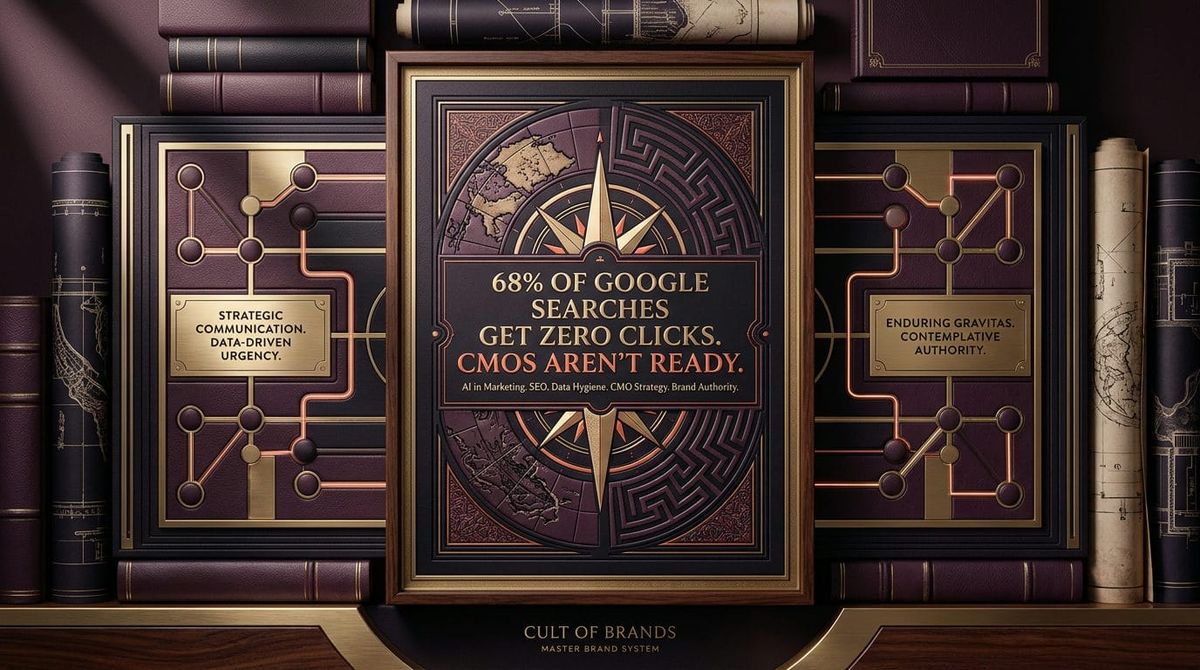
The CMOs who will run tomorrow's enterprises are not just investing in AI; they're meticulously rebuilding their foundational data, organizational structures, and strategic moats to ensure AI becomes a force multiplier, not a data amplifier for existing chaos.
📊 10 episodes across 9 podcasts
⏱ 375 minutes of intelligence analyzed
🎙 Featuring: Omar Roubi (University of Colorado Denver), Matt Spiegel (EVP of TruAudience Growth Strategy, TransUnion), Evan Shapiro (Media Cartographer, Media Cartographer), Ross Simmonds (Founder, Foundation)
|
One Big Thing
The proliferation of AI is forcing a reckoning for marketers: without rigorous foundational work—especially in data hygiene and strategic intent—AI only amplifies existing inefficiencies, rather than generating new value. While 89% of marketers are increasing AI investment, a mere 13% have successfully scaled it, highlighting a critical gap between ambition and operational readiness. This isn't just about selecting the right tools; it's about redesigning entire workflows and data architectures to prevent AI from becoming a sophisticated echo chamber for flawed inputs.
"You have to actually have all your data house in order, in order to feed the LLM the right information."
— Matt Spiegel, EVP of TruAudience Growth Strategy at TransUnion
This "unsexy" groundwork—data cleaning, identity resolution, and precise workflow redesign—is emerging as the true competitive differentiator. Without it, companies risk investing heavily in AI solutions that deliver inaccurate insights or, worse, reinforce suboptimal processes. The real opportunity for CMOs is not just to integrate AI, but to leverage its demanding requirements to finally bring order and strategic coherence to fragmented data landscapes and organizational silos. The conversation is shifting from "which AI tool?" to "how should we organize this team to do the best work and get the best results," as Matt Spiegel, EVP of TruAudience Growth Strategy at TransUnion, highlighted. The CMO who leads this organizational and data transformation will redefine marketing's contribution, moving beyond campaign metrics to impact true enterprise value.
The Rundown
① The "Unshipping" Imperative for Strategic Focus.
Neil Patel, Host of Marketing School, underscored the concept of 'unshipping,' asserting that it is as critical as shipping for maintaining focus and excellence. Super Memory's decision to discontinue its viral "Brain" product exemplifies how even successful ventures must shed products or features that divert resources from core strengths. (Neil Patel on Marketing School - Digital Marketing and Online Marketing Tips)
→ The Implication for CMOs: Marketing leaders must regularly audit their product and campaign portfolios, advocating for the discontinuation of initiatives, however popular, that no longer align with strategic priorities or dilute brand focus, freeing up capital and talent.
② AI Search Demands Authority and Impression Value, Not Just Clicks.
Jordan Koene, CEO and co-founder of Previsible, revealed that 68% of Google searches now conclude without a click, signifying a fundamental shift in how search traffic is distributed and measured in the AI era. This redefines SEO, emphasizing an authoritative digital presence across various channels that LLMs draw from, including third-party review sites. (Jordan Koene on MarTech Podcast ™ // Marketing + Technology = Business Growth)
→ The Implication for CMOs: Prioritize an "impression value" metric over clicks, focusing on building comprehensive brand authority and presence on platforms like G2, Capterra, and even internal "About Us" pages, which LLMs heavily crawl, to ensure brand visibility in generative AI responses.
③ Marketing ROI is a Strategic Minefield, Not a Simple Equation.
Omar Roubi, CPA and Educator at the University of Colorado Denver, critiqued the over-reliance on direct ROI calculation for certain marketing aspects, especially awareness and qualitative metrics. He used the Target Canada failure to illustrate how operational and strategic missteps can undermine even effective marketing, making direct ROI a "fool's errand" for some functions. (Omar Roubi on Sleeping Barber - A Marketing Podcast)
→ The Implication for CMOs: Shift the conversation from simplistic marketing ROI to a more nuanced view of marketing's contribution to enterprise value, using leading indicators, brand equity, and long-term customer value to justify strategic investments beyond immediate sales metrics.
④ Earn Speed by Slowing Down: The "Move Fast and Fix Things" Paradox.
Anne Morriss, Co-author of "Move Fast and Fix Things," argued that true organizational speed is achieved by initially slowing down to invest in processes, people, and relationships. This counterintuitive approach builds a robust foundation that prevents costly mistakes and accelerates sustainable change. (Anne Morriss on Renegade Marketers Unite)
→ The Implication for CMOs: Before rushing into new strategies or tech deployments, ensure your team has clarity on root problems, diversified perspectives, and a solid relational foundation, as this deliberate pace will ultimately deliver faster, more durable results.
⑤ Creator Context OS: Beyond Generic AI for Distinctive Content.
Kieran Flanagan, Host of Hubspot Media, introduced the "Creative Context OS" (Creator MD, Audience MD, Taste MD files) as a method to infuse AI-generated content with a marketer's unique voice and judgment, combating the rise of generic, "commodity" AI content. "When the cost of production is free, when it's so easy to make things. With AI, judgment and taste is the only thing with a price," he noted. (Kieran Flanagan on Marketing Against The Grain)
→ The Implication for CMOs: Equip marketing teams with frameworks and data to train AI with specific brand voice, audience understanding, and aesthetic standards, ensuring that AI augments, rather than dilutes, the brand's distinctive creative output and intellectual property.
Signal Board
🔥 Heating Up
• Reddit's Dominance in Search Results 🆕: Google's partnership with Reddit has propelled it to a primary source for LLMs and search engines, particularly for transactional queries, making it an underutilized channel for brand engagement. (Ross Simmonds on Marketing Over Coffee Marketing Podcast)
• Brand as a Moat: Peter Diamandis's framework of speed of reinvention, capital velocity, and brand as surviving moats underscores the enduring strategic importance of a strong, adaptive brand in an AI-driven economy. (Eric on Marketing School - Digital Marketing and Online Marketing Tips)
• Holistic ROAS: Tenuity's "love growth, hate waste" ethos emphasizes a holistic ROAS model that measures not just immediate sales but enterprise value, brand equity, and future demand, crucial for long-term growth. (Kelly Salomon on AdExchanger)
👀 On Watch
• Employee Generated Content (EGC) will be a huge movement in media (next 5 years): Expect a significant shift towards companies hiring creators as employees to drive their media strategy, leveraging internal talent for authentic content. (Evan Shapiro on Uncensored CMO)
• AI agents and data quality ('unsexy stuff'): The effectiveness of AI agents hinges on the meticulous, often overlooked, work of data cleaning and workflow building, which is the true differentiator for successful AI implementation. (Abby Klassen on AdExchanger)
• 68% of Google searches end without a click (first 4 months of 2026) 🆕: This statistic indicates a profound change in search behavior due to AI answer engines, forcing marketers to reconsider traditional click-based measurement and focus on impression value. (Jordan Koene on MarTech Podcast ™ // Marketing + Technology = Business Growth)
❄️ Cooling Off
• Instagram and Facebook advertising overvaluation: Facebook's aging demographic (over 55 for more than half its audience) suggests its diminishing returns for reaching younger consumers, despite continued ad spend. (Evan Shapiro on Uncensored CMO)
• Ad Fraud in Media Ecosystem: Up to 50% of advertising spend is directed to non-human audiences due to pervasive ad fraud, raising questions about the efficiency and integrity of current media buys. (Evan Shapiro on Uncensored CMO)
• Coaches who sell 'how to get rich' / unethical coaching: The prevalence of superficial "get-rich-quick" coaches stands in stark contrast to seasoned Silicon Valley mentors, highlighting a decline in genuine, value-driven mentorship. (Eric Siu on Marketing School - Digital Marketing and Online Marketing Tips)
The Tension
The rise of AI in marketing is sparking a debate: Is AI an augmentation tool that elevates human potential or an engine of commoditization that diminishes the value of human creativity and judgment?
"The companies that are going to win are not asking like, how do we do the same thing with fewer people. They're asking, what can our people accomplish now that they couldn't before?"
— Abby Klassen, CEO at Tenuity
🏛️ The Augmentation Doctrine: Proponents argue that AI, by automating rote tasks, frees up human talent to focus on higher-order strategic thinking, creativity, and relationship building. Abby Klassen, CEO of Tenuity, articulated this by noting that winning companies leverage AI to empower their teams to achieve what was previously impossible, rather than merely reducing headcount. This perspective sees AI as a powerful co-pilot, enhancing human judgment and expanding the scope of what a single marketer can achieve.
"AI creates commodity content, lacking distinctiveness."
— (contrarian_views on Marketing Against The Grain)
🚀 The Commoditization Doctrine: Conversely, there's concern that AI's ability to generate content and insights at scale will inevitably lead to a deluge of generic, undifferentiated output, cheapening creative work and making it harder for brands to stand out. This view, highlighted in discussions around AI-created "commodity content," warns that without careful human oversight and the infusion of unique "taste" and "judgment," AI will produce a landscape of bland, indistinguishable marketing, erasing the very distinctiveness brands strive for.
The Advisor's Read: The evidence suggests that AI's impact is a direct function of human input and strategic intent: it commoditizes when used generically, but augments profoundly when rigorously trained with unique brand context, data, and human judgment.
The Bottom Line
The CMO's ultimate mandate is no longer just to generate demand but to strategically architect the very foundations—data, talent, and brand moats—that will allow their organization to thrive in an AI-powered, attention-scarce future.
Toolkit: The Creative Context OS for Distinctive AI Content
Kieran Flanagan, Host at Hubspot Media, introduced the "Creative Context OS" as a practical framework to ensure AI-generated content reflects a brand's unique voice and perspective. This isn't about outsourcing creativity but instilling your distinctive judgment into AI.
- Creator MD File: Compile examples of your best work—blog posts, emails, presentations—that showcase your unique style, tone, and strategic perspective. Feed this to your AI to teach it "how you think and create."
- Audience MD File: Develop a detailed profile of your target audience, including their pain points, aspirations, language patterns, and what truly resonates with them. This explains to the AI "who you create for and what they care about."
- Taste MD File: Define your brand's aesthetic, quality benchmarks, and creative judgment. Include examples of content you admire and content you deem "commodity." This teaches the AI "what you think is good."
By leveraging these three files, CMOs can transform AI from a generic content generator into a powerful, on-brand creative partner, ensuring marketing output maintains distinctiveness in a crowded, AI-powered landscape.
Quick Appendix
AdExchanger: "Want AI Agents That Work? You've Gotta Do The 'Unsexy' Stuff First" · 47 min · Featuring Abby Klassen▶ Listen · Apple Podcasts
For the CMO looking to operationalize AI: This episode dissects the critical, often overlooked, data and process groundwork required before AI can deliver meaningful results, offering insights into effective AI implementation.
Marketing Against The Grain: "Train Your AI to Write Like a Human With Just 3 Files" · 30 min · Featuring Kieran Flanagan▶ Listen · Apple Podcasts
For the CMO focused on brand distinctiveness: Learn a practical framework to imbue AI with your brand's unique voice and judgment, moving beyond generic content generation to truly strategic creative output.
Marketing Over Coffee Marketing Podcast: "Ross Simmonds on The Power of Reddit" · Featuring Ross Simmonds▶ Listen · Apple Podcasts
For the CMO optimizing for AI search and authority: Understand Reddit's increasing influence on LLMs and search engines, and how to leverage it to build brand authority and capture transactional queries.
Marketing School - Digital Marketing and Online Marketing Tips: "Jensen Huang's Moat Is Dead. But He Has A Plan" · 24 min · Featuring Eric▶ Listen · Apple Podcasts
For the CMO building durable competitive advantage: Explores the evolving nature of business moats in the AI era, including the enduring power of brand and the speed of reinvention as strategic imperatives.
Marketing School - Digital Marketing and Online Marketing Tips: "Stop Shipping Everything: Why supermemory Killed Its Viral Product" · 23 min · Featuring Neil Patel▶ Listen · Apple Podcasts
For the CMO prioritizing strategic focus: A discussion on the overlooked importance of "unshipping" products or initiatives that distract from core competencies, crucial for maintaining strategic clarity.
MarTech Podcast ™ // Marketing + Technology = Business Growth: "Rebuilding 2,000 Pages for the AI Search Era" · 51 min · Featuring Jordan Koene▶ Listen · Apple Podcasts
For the CMO adapting to the AI search era: Provides insights into how AI is fundamentally changing search behavior, emphasizing impression value, brand authority, and optimizing for LLM consumption.
Renegade Marketers Unite: "538: Need for Speed? Earn It First" · 48 min · Featuring Anne Morriss▶ Listen · Apple Podcasts
For the CMO leading organizational change: Offers a counter-intuitive perspective on achieving speed through foundational investments in process, people, and relationships, crucial for sustainable growth.
Sleeping Barber - A Marketing Podcast: "SBP 240: SBP Interview - Target Canada: The Rise and Fall of a Promise, with Omar Roubi" · 63 min · Featuring Omar Roubi▶ Listen · Apple Podcasts
For the CMO connecting marketing to enterprise value: A deep dive into the strategic missteps of Target Canada, illustrating how operational failures can overshadow effective marketing and highlighting the limitations of simplistic ROI metrics.
The Agile Brand with Greg Kihlström®: Expert Mode Marketing Technology, AI, & CX: "TransUnion's Matt Spiegel on the AI confidence-readiness paradox: AI is only as good as the data you feed it" · 30 min · Featuring Matt Spiegel▶ Listen · Apple Podcasts
For the CMO navigating AI adoption: Addresses the paradox between high AI investment and low scaled adoption, emphasizing the critical role of data readiness and organizational redesign for successful AI integration.
Uncensored CMO: "Why marketers are wasting their media budgets - Evan Shapiro" · 59 min · Featuring Evan Shapiro▶ Listen · Apple Podcasts
For the CMO optimizing media spend: Offers a provocative analysis of the evolving media landscape, highlighting undervalued channels (YouTube) and pervasive ad fraud, urging a shift from scale to engagement.
Topics