PodStreet Weekly
 Velocity Meter
 CX-O
CX-O Cult of Brands
 Growth Glider
 Dear Brain
Grit Alone Is Not Enough to Drive Outcomes Anymore
Leaders must optimize environments—culture, markets, well-being—to unleash potential, not just rely on individual capabilities; learn how top performers design context for success.
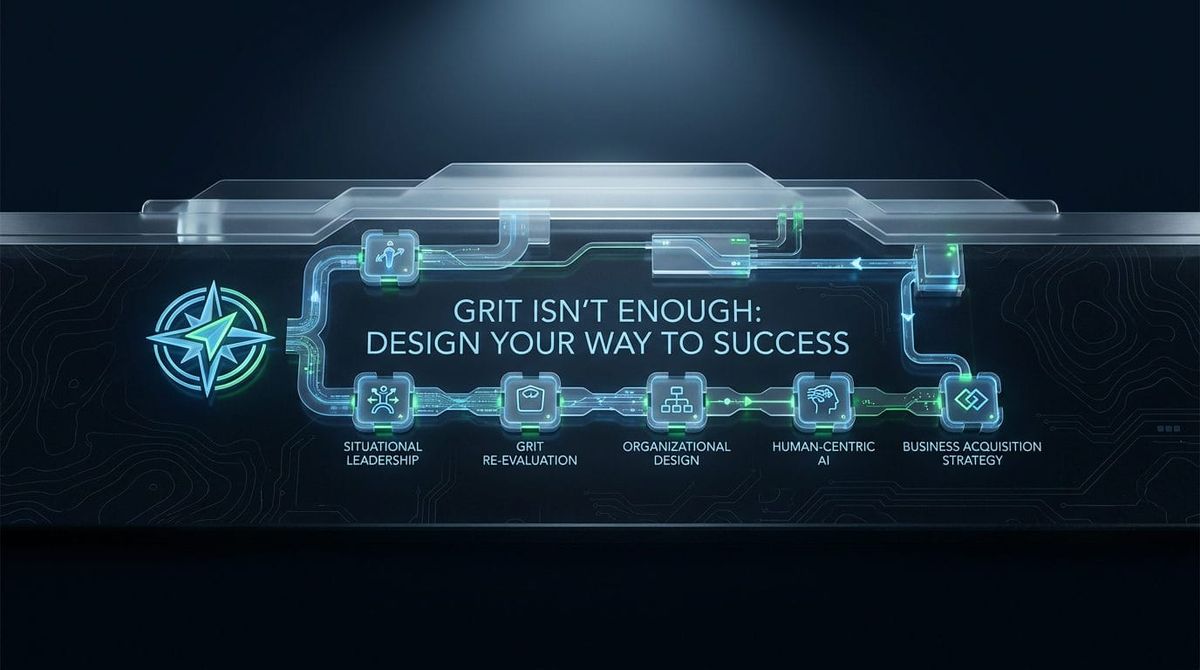
The core strategic challenge for leaders is shifting from a fixation on individual capabilities to optimizing the enabling environments — be they corporate culture, market dynamics, or even personal well-being — to unleash untapped potential.
📊 11 episodes across 11 podcasts
⏱ 501 minutes of intelligence analyzed
🎙 Featuring: David Young, Antoinette Gawin, Molly, Chip Conley
|
The Big Shift: Beyond Individual Grit to Situational Mastery
In a business landscape increasingly shaped by rapid change and complex challenges, the traditional emphasis on individual resilience and "grit" is yielding to a more nuanced understanding: the power of the situation. This week's conversations reveal a critical pivot in strategic thinking, moving from an exclusive focus on internal drive to recognizing how external environments—from corporate processes to market conditions and even personal habits—profoundly dictate outcomes. Leaders must now become architects of these enabling conditions, rather than solely demanding more from individuals.
This is not a repudiation of personal responsibility, but rather a strategic expansion of it. As Angela Duckworth, Psychologist and Professor at University of Pennsylvania, now famously known for her work on 'grit,' candidly stated, "I think the provocative concept that I'm trying to champion here is that agency isn't just controlling your own thoughts, feelings and actions. I think there is agency in changing the situation." This insight, shared on Dare to Lead with Brené Brown, signals a crucial evolution: top performers don't just "power through"; they master the art of designing their context for success.
"I think it's a game changer, and I do not think at all that it is an about face. From grit, I think it is a yes. And from grit, I went too far down the grit road, even despite your warnings."
— Brené Brown, Host of Dare to Lead
Why it matters: For boards and CEOs, this shift reframes strategic investments. Instead of solely focusing on talent acquisition and individual performance metrics, capital should also flow into optimizing organizational structures, refining processes, fostering a psychologically safe culture, and creating systems that reduce friction and amplify positive behaviors. From employee experience design (Tiffani Bova on Radical Candor) to proactive reputation management (Megan Paquin on CEO School), and even managing personal transitions (Chip Conley on Worklife with Adam Grant), the message is clear: the situation often trumps willpower. Ignoring this is to leave significant performance on the table, expecting individuals to overcome systemic deficiencies through sheer force of will, a strategy proven to be "fallible and exhausting" (Angela Duckworth). The strategic leader of tomorrow is not just a motivator, but a master architect of enabling environments.
IDEAS IN BRIEF
① Empathetic Leadership Requires Strategic Alignment for Operational Autonomy.
Leaders must provide clear strategic direction but empower teams to make operational decisions, especially in dynamic environments. Antoinette Gawin, President and CEO of Terumo Blood and Cell Technologies, noted that "If you are tightly aligned strategically, then people know what the right decision is, even if you are not in the room" (C-Suite Perspectives).
→ The Implication: High-performance organizations are built on trust and clarity, where distributed decision-making accelerates response times and fosters innovation, especially during crises.
② Midlife Transitions Are Nuanced Periods of Re-evaluation, Not Just Crisis.
The common narrative of a dramatic midlife crisis is often a Hollywood stereotype; most individuals experience a more gradual "unraveling" or "stuckness" that prompts a re-evaluation of life's purpose and expectations. Chip Conley, Founder of Modern Elder Academy, highlighted that "the truth is, there's not a ton that shows that there is a widespread midlife crisis. What there is... is a long, slow decline in life satisfaction that bottoms out around 45 to 50" (Worklife with Adam Grant).
→ The Opportunity: Companies should develop programs that support employees through these critical life transitions, fostering an environment where re-skilling and purpose re-alignment are seen as assets, not liabilities, for continued engagement and contribution.
③ Corporate Rule-Making is Shaping Society Beyond Traditional Regulation.
Corporations are increasingly acting as de facto rule-makers, particularly in areas like AI governance, often outpacing and even influencing formal government regulations. Stavros Gadinis, Professor of Law at UC Berkeley, emphasized that "you can't design a structure for a $50 million startup and expect that the same structure will hold when that startup becomes a trillion dollar company" (Boardroom Governance with Evan Epstein).
→ The Mandate: Boards must proactively engage in corporate ordering, recognizing their role in societal governance and ensuring internal frameworks for emerging technologies are robust, transparent, and anticipatory of broader social impact.
④ Buying an Existing Business Offers a More Reliable Path to Wealth Creation.
Rather than starting a business from scratch, acquiring an established small business presents a lower-risk and often more financially viable entrepreneurial path. Codie Sanchez, Founder and CEO of Contrarian Thinking, asserted that "the SBA's failure rate right now is like less than 13%" for approved small business acquisitions, compared to a "90% failure rate" for startups (Masters of Scale).
→ The Strategy: For individuals and firms seeking diversification or growth through acquisition, a strategic focus on proven, cash-flow positive small businesses in manufacturing, home services, or skilled trades may offer superior returns and stability.
⑤ Undermining Employee Experience Undermines Customer Experience.
A significant disconnect exists between executive perception and employee reality regarding feedback and engagement, directly impacting customer outcomes and overall productivity. Tiffani Bova, Chief Strategy and Research Officer at The Futurum Group, highlighted that "87% of executives don't know what to do with the employee feedback that they collect. And employees who give feedback that goes nowhere conclude that their executives don't listen or don't care or both" (Radical Candor).
→ The Imperative: Boards should press for concrete action plans on employee feedback, viewing employee experience as a leading indicator for customer satisfaction and a critical driver of long-term value, moving beyond superficial surveys to systemic improvements.
⑥ AI is a Powerful Accelerator for Existing Capabilities, Not a Substitute for Human Judgment.
While AI offers significant efficiencies in communication and data synthesis, its primary value lies in augmenting, not replacing, human critical thinking, empathy, and accountability. Matt Abrahams, Professor at Stanford University, noted that "AI is both helping and, I believe, hindering the way leaders are doing their work... it poses the risk of jeopardizing authenticity, hindering empathy" (HBR IdeaCast).
→ The Guidance: Leaders must establish clear AI usage etiquette within organizations, focusing on leveraging AI as a thought partner for brainstorming and structuring, while retaining ultimate human judgment and accountability to preserve authenticity and critical thinking.
⑦ Deep Personal Connections Drive Business Success and Leadership Development.
Building genuine, non-transactional relationships and investing in people are crucial for both individual and organizational success, fostering mentorship, sponsorship, and a "community-built" approach to leadership. Demond Martin, Cofounder and CEO of WellWithAll, shared his philosophy that "there's this false narrative that people pull themselves up by their bootstraps and they become, you know, great successes. I'm definitely not self made. I'm community built" (How Leaders Lead).
→ The Takeaway: Boards should champion initiatives that encourage deep relationship-building, recognizing that investing in the development of a supportive ecosystem around leaders and employees yields disproportionate returns in loyalty, innovation, and long-term organizational health.
⑧ Intuition and Human Values Drive Breakthrough Innovation More Than Algorithmic Logic.
Iconic innovations, like the Apple Store, often arise from counter-intuitive human insights and a deep understanding of customer experience, deliberately defying algorithmic suggestions or conventional wisdom. Ron Johnson, Creator of the Apple Store, highlighted that "everything we did is different to what ChatGPT would have said. And the reason I did that is my upbringing" (The Leadership Podcast).
→ The Challenge: As AI proliferates, leaders must safeguard space for intuition and values-driven decision-making, ensuring that the pursuit of efficiency doesn't inadvertently stifle the kind of "rewind button" thinking and human-centric design that leads to truly transformative customer experiences.
Signal Board
🔥 HEATING UP
• Empathetic Leadership: Recognizing that understanding employee and customer context is a strategic advantage, driving better decision-making and fostering loyalty. (Antoinette Gawin on C-Suite Perspectives)
• Corporate Rulemaking: The expanding role of companies in establishing governance frameworks, particularly for emerging technologies like AI, often setting precedents for formal regulation. (Stavros Gadinis on Boardroom Governance with Evan Epstein)
• Buying Existing Businesses: A rising recognition that acquiring established small businesses offers a more stable and less risky path to entrepreneurship and wealth creation than starting from scratch. (Codie Sanchez on Masters of Scale)
🌱 ON WATCH
• Situated Mindset (environmental influence on behavior) 🆕: The growing understanding that external environments and designed situations are as critical as individual willpower in shaping behavior and achieving goals. (Angela Duckworth on Dare to Lead with Brené Brown)
• WellWithAll 🆕: A wellness company explicitly integrating social impact by dedicating 20% of profits to combat health inequity, showcasing a new model for purpose-driven business. (Demond Martin on How Leaders Lead)
• Muse (Meta AI agent) 🆕: Its rapid rise to top of app store indicates significant market acceptance and potential for AI agents to dominate consumer interaction. (George Hahn on The Prof G Pod with Scott Galloway)
• Apple Store 🆕: Its founding principles offer a contrarian view on retail, demonstrating that human-centric design, even defying conventional logic, can lead to monumental success. (Ron Johnson on The Leadership Podcast)
❄️ COOLING OFF
• Willpower as Sole Success Driver 🆕: The belief that sheer grit and individual willpower are sufficient for long-term behavior change and goal achievement is being re-evaluated, with greater emphasis on situational design. (Angela Duckworth on Dare to Lead with Brené Brown)
• Generic AI Advice for Small Businesses: The unhelpful and often misleading nature of broad AI recommendations for small enterprises that lack specific data or contextual relevance. (Codie Sanchez on Masters of Scale)
• Outsourcing Empathy to AI: The risk of losing authentic human connection and critical thinking by over-relying on AI for communication and decision-making. (Matt Abrahams on HBR IdeaCast)
THE TENSION
The Tension: The Role of AI in Communication: Efficiency vs. Authenticity.
🔵 Efficiency Advocates: AI, particularly Large Language Models, are seen as invaluable tools for leaders to synthesize vast amounts of information and structure ideas efficiently. Matt Abrahams, Professor at Stanford University, highlighted AI's capacity for "providing an opportunity for leaders to synthesize a tremendous amount of information, to structure it in a way that's meaningful" (HBR IdeaCast). The argument is that AI frees up cognitive load, allowing leaders to focus on higher-level strategic thinking.
🔴 Authenticity Concerns: Critics warn that over-reliance on AI in communication jeopardizes authenticity and hinders empathy, leading to homogenized, "average" outputs. Alison Beard, Host at Harvard Business Review, quoted a colleague saying, "LLMs are really just an averaging machine. So if you want to be average, you should use, use them" (HBR IdeaCast). The fear is an "authenticity crisis" where genuine human thought becomes indistinguishable from AI-generated content, eroding trust and connection.
The Strategist's Read: While AI offers undeniable efficiency, genuine leadership in the coming years will be defined by the ability to strategically blend AI-driven insights with deeply human judgment and authentic voice, never delegating accountability or empathy.
The Bottom Line
Strategic leaders are shifting focus from simply demanding grit to designing the optimal conditions, systems, and environments that naturally cultivate desired behaviors and foster authentic human connection.
Quick Appendix
C-Suite Perspectives: "Why Empathy Is a CEO's Strategic Advantage: Terumo CEO Antoinette Gawin" · 32 min · Featuring David Young ▶ Listen · Apple Podcasts
Who Should Listen & Why: CEOs looking to cultivate empathetic leadership, understand global crisis management, and empower teams through strategic alignment for operational autonomy.
Worklife with Adam Grant: "How to survive a life quake with Chip Conley" · 57 min · Featuring Molly ▶ Listen · Apple Podcasts
Who Should Listen & Why: Leaders and HR professionals seeking to understand and support employees navigating midlife career and personal transitions, moving beyond simplistic "midlife crisis" narratives.
Boardroom Governance with Evan Epstein: "Stavros Gadinis: Corporate Ordering | How Corporations Navigate Social Conflict" · 50 min · Featuring Stavros Gadinis ▶ Listen · Apple Podcasts
Who Should Listen & Why: Board members and general counsels needing to understand the evolving role of corporations as societal rule-makers, especially concerning AI governance and compliance.
Masters of Scale: "Rapid Response: Stop creating businesses. Buy one instead, with Codie Sanchez" · 33 min · Featuring Codie Sanchez ▶ Listen · Apple Podcasts
Who Should Listen & Why: Aspiring entrepreneurs and investors exploring wealth creation beyond startups, focusing on proven acquisition strategies in stable, high-opportunity sectors.
CEO School with Suneera Madhani: "How to Handle Crisis Management with PR Expert Megan Paquin" · 50 min · Featuring Megan Paquin ▶ Listen · Apple Podcasts
Who Should Listen & Why: Founders and executives looking to proactively build reputation, understand crisis communication, and avoid common pitfalls in managing professional relationships.
Radical Candor: Communication at Work: "Fixing the Employee Experience (with Tiffani Bova)" · 60 min · Featuring Kim Scott ▶ Listen · Apple Podcasts
Who Should Listen & Why: Leaders and HR professionals grappling with employee feedback, aiming to improve employee experience, and link it directly to customer satisfaction and productivity.
HBR IdeaCast: "How AI Is Changing Communication: Weighing Efficiency with Efficacy" · 34 min · Featuring Matt Abrahams ▶ Listen · Apple Podcasts
Who Should Listen & Why: Executives and communication leads navigating AI integration, balancing efficiency gains with the critical need to preserve authenticity and empathy in leadership messaging.
The Prof G Pod with Scott Galloway: "The Week: Trump vs the Press, Meta’s AI Win, and the Turning Political Tide" · 21 min · Featuring George Hahn ▶ Listen · Apple Podcasts
Who Should Listen & Why: Strategic thinkers and investors interested in the macro-level implications of AI's market dominance and geopolitical shifts affecting trade and social safety nets.
How Leaders Lead with David Novak: "#310: Demond Martin, Cofounder and CEO, WellWithAll – Recognize how others shape you" · 56 min · Featuring Demond Martin ▶ Listen · Apple Podcasts
Who Should Listen & Why: Leaders focused on relationship building, leveraging AI, and understanding how personal values and community contribute to scaling impactful businesses.
The Leadership Podcast: "TLP530: Leadership Lessons from Building the Apple Store with Ron Johnson" · 44 min · Featuring Ron Johnson ▶ Listen · Apple Podcasts
Who Should Listen & Why: Retail executives and innovators seeking lessons in human-centric design, counter-intuitive strategic choices, and the role of intuition in building iconic brands.
Dare to Lead with Brené Brown: "Why Grit Isn’t Always Enough with Angela Duckworth" · 64 min · Featuring Brené Brown ▶ Listen
Who Should Listen & Why: Leaders, educators, and anyone interested in personal development, challenging traditional notions of "grit" to understand the profound impact of environmental design on behavior and success.
Topics