PodStreet Weekly
 Velocity Meter
 CX-O
CX-O Cult of Brands
 Growth Glider
 Dear Brain
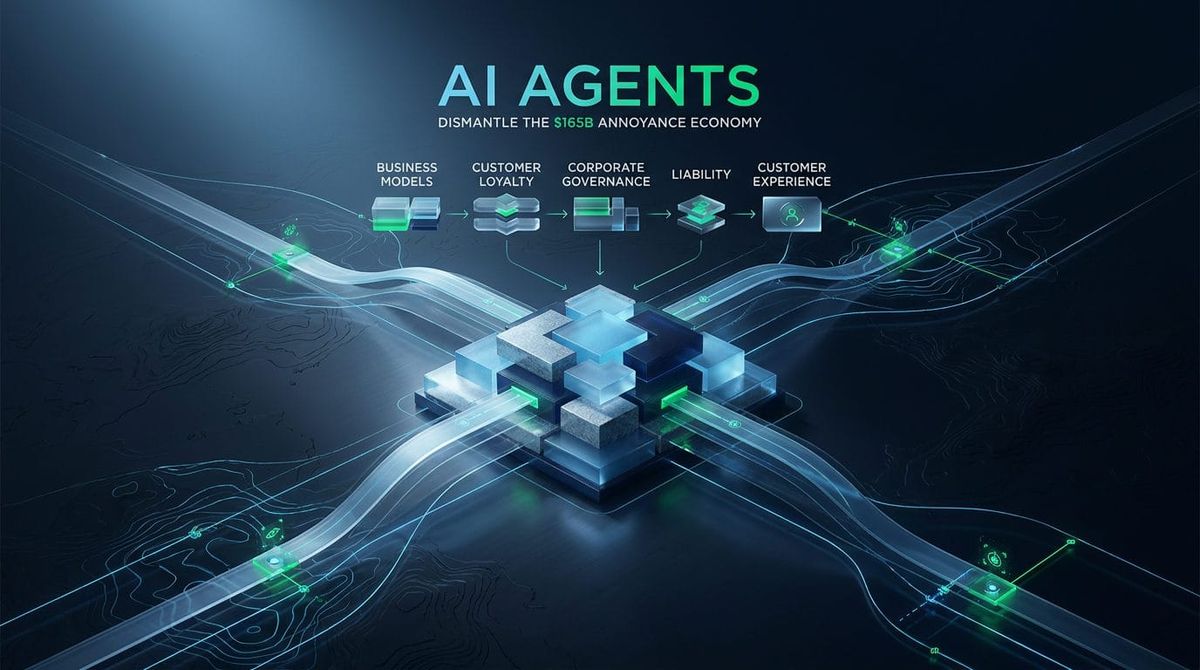
Meta's Muse Threatens the $165 Billion Annoyance Economy
AI agents like Meta’s Muse are poised to dismantle the "$165 billion annoyance economy" by automating tasks that exploit customer complacency, forcing businesses to re-evaluate how they capture value.
Artificial intelligence is not just a technological shift but a profound catalyst reshaping leadership, governance, and even our most fundamental human needs like belonging and vulnerability.
📊 11 episodes across 8 podcasts
⏱ 452 minutes of intelligence analyzed
🎙 Featuring: Mark Pincus, Muriel Wilkins, Timothy Snyder, Matt Abrahams, Jennifer Ferro, Jim Vaselopulos, Jan Rutherford, Trump
|
THE BIG SHIFT
The rise of advanced AI agents is catalyzing an unexpected strategic pivot for leaders: it's forcing a re-evaluation of how businesses capture value, how boards govern, and how individuals define critical human attributes like trust and belonging. Far from merely optimizing operations, AI is now directly challenging established business models that rely on customer inertia, while simultaneously demanding unprecedented clarity and ethics in governance. The shift is so profound that even fundamental human needs are being recontextualized through the lens of AI's societal impact.
The Disruption of Inertia: AI agents like Meta’s Muse are poised to dismantle what some call the "$165 billion annoyance economy," which profits from customer complacency. Jack Raines, Host of The Prof G Pod, highlighted how these agents automate tasks like finding refunds and canceling subscriptions, directly impacting companies reliant on consumer inertia. This suggests a future where businesses must earn customer loyalty through value, not friction.
Governance in the Age of Agents: This technological leap extends to the boardroom, where AI agents present complex liability questions. Jackie Liu, Partner at Morrison & Foerster, raised the critical question: "Like if you have an agent and they're doing critical functions and the agent makes a wrong decision and there's liability, like who holds the bag?" This legal ambiguity underscores the urgent need for boards to assess material AI use cases and proactively shape policy, rather than await regulatory clarity, as Sabastian Niles, President and Chief Legal Officer at Salesforce, emphasized that "Companies, management teams, boards, you cannot wait for regulatory clarity to choose to lead with trust."
The Human Element Redefined: Beyond business, AI's pervasiveness also elevates the importance of authentic human connection and critical thinking. Muriel Wilkins, Host of Coaching Real Leaders, warned that relying on AI for communication can diminish critical thinking, urging leaders to "think, thinking, thinking" as a prod to engage their own intellect. This extends to societal structures, where Jan Rutherford, Host of The Leadership Podcast, invoked Morgan Housel's insight that "People don't want the truth. They want to belong." In an AI-saturated world, the leader's role in fostering genuine belonging and critical thought becomes paramount, suggesting that the most strategic assets of the future may be distinctly human.
"Companies, management teams, boards, you cannot wait for regulatory clarity to choose to lead with trust. And I mean that very deeply and practically."
— Sabastian Niles, President and Chief Legal Officer at Salesforce on Boardroom Governance with Evan Epstein
IDEAS IN BRIEF
① Boards Must Proactively Govern AI, Not Just React.
Companies cannot afford to wait for regulatory clarity on AI liability, requiring boards to proactively lead with trust and define ethical use cases now. (Sabastian Niles on Boardroom Governance with Evan Epstein)
→ The Implication: Boards that fail to embed AI ethics and accountability into their strategic framework today risk significant legal and reputational exposure as AI agent usage becomes more widespread.
② Public Media Needs a 'Public Internet' to Combat Algorithmic Manipulation.
Fact-based media struggles against engagement-driven algorithms, necessitating a "public Internet" free from manipulation, akin to public libraries. (Jennifer Ferro on Masters of Scale)
→ The Opportunity: For businesses reliant on trusted information or community building, exploring decentralized platforms or supporting public digital infrastructure could mitigate risks from biased algorithms and foster more authentic engagement.
③ AI Agents Are Disrupting Business Models Built on Customer Inertia.
Meta's Muse and similar AI agents are poised to dismantle the "$165 billion annoyance economy" by automating tasks that exploit customer complacency. (Jack Raines on The Prof G Pod with Scott Galloway)
→ The Imperative: Companies should immediately re-evaluate business models that rely on customer friction or inertia, as AI will enable consumers to bypass costly inconveniences, forcing a shift towards genuine value creation.
④ US Foreign Policy is Undermining Its Own Superpower Status.
A transactional "oligarch" mentality in US foreign policy, particularly concerning Ukraine, is leading to "superpower suicide" by undermining democratic institutions and global alliances. (Timothy Snyder on The Prof G Pod with Scott Galloway)
→ The Strategic Insight: Geopolitical instability and the erosion of trust in global leadership demand that multinational organizations diversify their strategic partnerships and supply chains, anticipating a more fragmented and transactional international environment.
⑤ C-Suite Executives Need Legal Counsel for Departures, Despite Their Expertise.
Despite their high-level experience, C-suite executives often make critical financial and strategic errors when negotiating their own exits, leaving millions on the table. (David Sanford on Clarity)
→ The Executive Imperative: Leaders should recognize that their negotiation skills in business do not automatically transfer to personal exit scenarios, making independent legal representation a critical, not optional, component of strategic career management.
⑥ GLP-1 Users Still Seek 'Affordable Luxuries' and Portion Control, Not Abstinence.
The candy business remains resilient to GLP-1 users, who seek portion-controlled treats and "affordable luxuries" rather than abandoning treats entirely. (Kirk Tanner on Masters of Scale)
→ The Market Signal: For consumer goods, the impact of health trends like GLP-1s is nuanced; rather than assuming outright rejection, focus on adapting product lines to offer controlled indulgence and premium experiences.
⑦ Vulnerability is a Pathway to Strength, Not Weakness.
Rigid masculine ideals of "precarious manhood" lead to addiction and depression, while embracing vulnerability builds resilience and stronger internal worlds. (Luke Bateman on ReThinking)
→ The Leadership Insight: Cultivating environments where vulnerability is seen as a strength can unlock deeper team cohesion, psychological safety, and innovation, challenging traditional notions of stoic leadership.
SIGNAL BOARD
⚡ Heating Up
• Pennant AI: This AI platform is creating a "world model for corporate governance," aiming to scale oversight for institutional investors across thousands of companies. (Ryan Nowicki Stewart on Boardroom Governance with Evan Epstein)
• AI (Generative AI for communication/critical thinking): Its impact is evolving from chatbots to agents that can diminish critical thinking if over-relied upon for communication. (Matt Abrahams on Coaching Real Leaders)
• Hershey Company: Despite market shifts, Hershey is leveraging AI for sales optimization and adapting products for GLP-1 users, maintaining cultural relevance for heritage brands. (Kirk Tanner on Masters of Scale)
• Meta: The tech giant is subsidizing its AI agent compute costs with massive advertising revenue, giving it a significant competitive advantage in the AI race. (Jack Raines on The Prof G Pod with Scott Galloway)
👀 On Watch
• Mark Pincus 🆕: The Zynga founder emphasizes trusting instincts while rigorously vetting ideas with a "Proven-Better-New" framework for product development. (Mark Pincus on How Leaders Lead with David Novak)
• Tribalism 🆕: Modern society's search for belonging amidst individualistic wants is explored, drawing parallels between high school social dynamics and workplace tribalism. (Jim Vaselopulos on The Leadership Podcast)
• rethinking masculinity's protector and provider roles 🆕: This theme challenges traditional male ideals, redefining protection as internal self-care and provision as creating emotionally supportive environments. (Luke Bateman on ReThinking)
• Influencing Without Formal Authority 🆕: A critical leadership skill, particularly in matrix organizations, emphasizing relationship building and reframing challenges as opportunities for influence. (Muriel Wilkins on Coaching Real Leaders)
🧊 Cooling Off
• Annoyance Economy: Business models that profit from customer inertia are facing disruption as AI agents automate tasks like refunds and subscription cancellations. (Jack Raines on The Prof G Pod with Scott Galloway)
• Fiduciary Duties in the AI Era: Despite AI's rapid advancement, the fundamental fiduciary duties of board members (duty of care, duty of loyalty) have not changed, though their application to AI requires new interpretation. (Jackie Liu on Boardroom Governance with Evan Epstein)
• Executives thinking they can negotiate their own exit: C-suite executives often err by trying to self-negotiate departures, highlighting a critical blind spot in their expertise. (David Sanford on Clarity)
THE TENSION
The strategic deployment of AI agents is creating a fundamental tension between optimizing customer experience and protecting established business models.
🔵 The Optimist's View: AI Agents as Customer Advocates. Jack Raines on The Prof G Pod with Scott Galloway, highlighted how AI agents like Meta's Muse are disrupting the "annoyance economy" by enabling consumers to easily find savings and cancel unwanted subscriptions. This perspective sees AI as empowering the consumer, forcing businesses to genuinely deliver value rather than exploit inertia.
🔴 The Incumbent's Dilemma: Protecting Business Models. Conversely, businesses with robust ecosystems and direct inventory control, such as Amazon and Resy, are actively blocking AI agents. They fear that these agents bypass their established platforms and revenue streams, preferring to maintain their existing customer engagement models rather than cede control to external AI. (Jack Raines on The Prof G Pod with Scott Galloway)
The Strategist's Read: This dynamic suggests a critical fork in the road for companies: embrace AI-driven customer empowerment and innovate, or risk being bypassed by agents acting on behalf of increasingly savvy consumers.
THE BOTTOM LINE
The strategic challenge isn't just adopting AI, but leveraging its disruptive force to redefine value and leadership in a world where inertia-driven profits erode and human connection is paramount.
APPENDIX
Boardroom Governance with Evan Epstein: "Leading Boards Through Rapid Change | Sabastian Niles and Jackie Liu" · 34 min · Featuring Sabastian Niles, Jackie Liu
Strategic Relevance: Essential for board members and strategic leaders to understand proactive AI governance and liability in a rapidly changing technological landscape. ▶ Listen · Apple Podcasts
Masters of Scale: "Don't be boring: KCRW's Jennifer Ferro on building a brand people love" · 34 min · Featuring Jennifer Ferro, Jamie Batmer
Strategic Relevance: For leaders aiming to build resilient brands and foster authentic community in a fragmented and algorithm-driven media environment. ▶ Listen · Apple Podcasts
The Prof G Pod with Scott Galloway: "Can Meta's Muse AI Agent Save You Money?" · 34 min · Featuring Jack Raines, JC Bahr-de Stefano
Strategic Relevance: Crucial for understanding how AI agents are directly challenging business models that profit from customer inertia and what that means for market positioning. ▶ Listen · Apple Podcasts
The Prof G Pod with Scott Galloway: "Timothy Snyder on America’s Superpower Suicide" · 50 min · Featuring Scott Galloway, Timothy Snyder
Strategic Relevance: Offers critical geopolitical context for leaders navigating global supply chains and international relations, particularly concerning US foreign policy and its long-term impacts. ▶ Listen · Apple Podcasts
Clarity: "Why are C-Suite executives leaving and trying to navigate the process alone?" · 28 min · Featuring Rabia Butler, David Sanford
Strategic Relevance: Important for C-suite executives and board members to understand the legal and strategic pitfalls of executive transitions and the value of expert counsel. ▶ Listen · Apple Podcasts
Masters of Scale: "Halloween meets GLP-1s: Hershey’s candy Super Bowl, with CEO Kirk Tanner" · 27 min · Featuring Kirk Tanner
Strategic Relevance: Valuable for consumer goods leaders to understand adapting heritage brands to new health trends and leveraging AI for sales optimization. ▶ Listen · Apple Podcasts
ReThinking: "The case for male vulnerability with Luke Bateman" · 47 min · Featuring Luke Bateman, Adam Grant
Strategic Relevance: For leaders seeking to cultivate stronger, more resilient team cultures by understanding and embracing the power of vulnerability in leadership. ▶ Listen · Apple Podcasts
The Leadership Podcast: "TLP531: Tribalism, Belonging, and the Leader's Role" · 32 min · Featuring Jim Vaselopulos, Jan Rutherford
Strategic Relevance: Provides frameworks for leaders to understand and foster belonging within organizations, a critical element in an increasingly fragmented world. ▶ Listen · Apple Podcasts
Boardroom Governance with Evan Epstein: "Ryan Nowicki Stewart (CEO, Pennant AI): AI, Proxy Voting, and the Future of Governance" · 56 min · Featuring Ryan Nowicki Stewart
Strategic Relevance: Essential for institutional investors and public companies seeking to understand how AI is transforming corporate governance oversight and shareholder engagement. ▶ Listen · Apple Podcasts
How Leaders Lead with David Novak: "#311: Mark Pincus, Founder & Former CEO, Zynga – Trust your instincts, but vet your ideas" · 69 min · Featuring Mark Pincus
Strategic Relevance: Offers entrepreneurial insights on product development, scaling leadership, and cultivating intellectual honesty for those building and leading innovative ventures. ▶ Listen · Apple Podcasts
Coaching Real Leaders: "Ask Muriel Anything: Listening to Your Team, Leading With Uncertainty, Balancing Empathy and Accountability" · 41 min · Featuring Matt Abrahams, Muriel
Strategic Relevance: For leaders looking to enhance communication, critical thinking, and their ability to balance empathy with accountability in complex organizational structures. ▶ Listen · Apple Podcasts
Topics