PodStreet Weekly
 Velocity Meter
 CX-O
CX-O Cult of Brands
 Growth Glider
 Dear Brain
Grit Was Supposed to Win, but Situation Proves Stronger
Angela Duckworth, famed for Grit, now stresses the "outside game," asserting external context can outweigh internal effort and is key to success, not just personal drive.
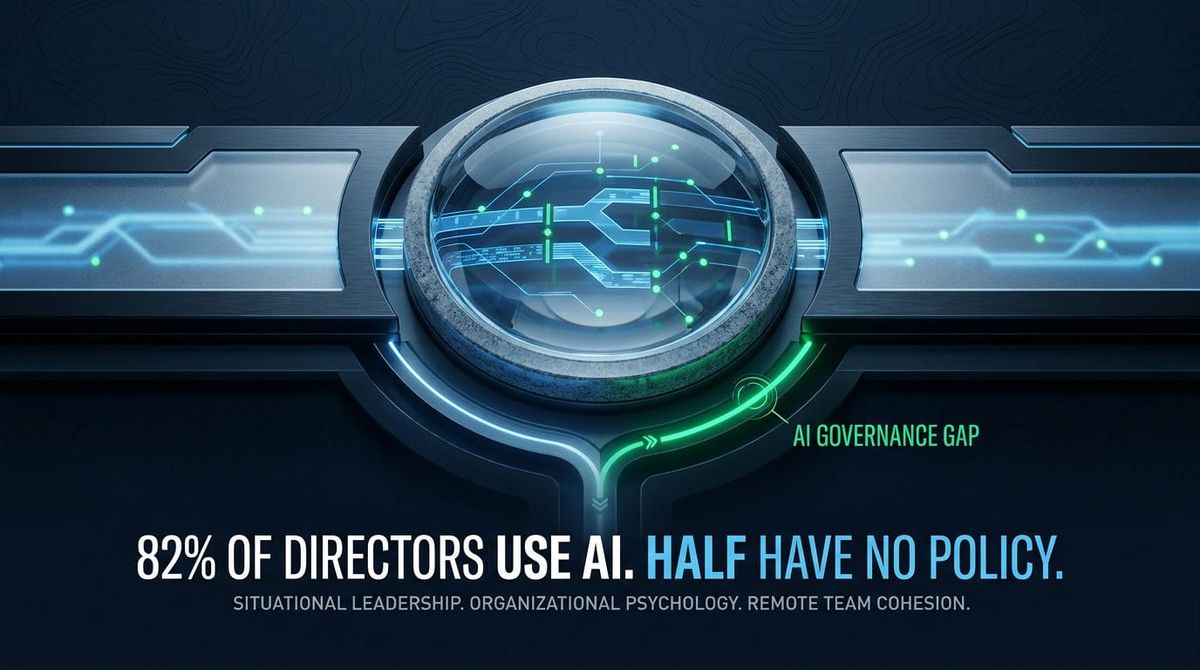
The next frontier of leadership isn't just about strategy, it's about mastering the human equation — understanding how deeply situation shapes success, how past narratives unconsciously govern current decisions, and how even in the age of AI, our most potent tools are still empathy and intentional community.
📊 11 episodes across 10 podcasts
⏱ 571 minutes of intelligence analyzed
🎙 Featuring: Evan Epstein, Raffaela Rein, Scott Galloway, Josh Tyrangiel, Clark Lea, Pam Manfredo Curtis, Kaya Henderson, Jess Hertz, Angela Duckworth, Suneera Madhani, Aaron Sandel, David Robson
|
The Big Shift
The strategic landscape is shifting from a sole focus on individual grit and leadership prowess to a profound recognition of how deeply situational factors and underlying human narratives shape outcomes, both for individuals and entire organizations. This isn't just about environment; it's about acknowledging the powerful, often unseen, forces that mold behavior and decision-making, even in the most rational of leaders.
Why it matters: Angela Duckworth, renowned for her work on Grit, now emphasizes the "outside game," arguing that "If you are disastrously situated, you cannot win. And it doesn't matter how hard you try" (Angela Duckworth, Rosa Lee and Egbert Chang Professor at University of Pennsylvania on Radical Candor). This reorients strategic thinking from merely developing internal capabilities to actively curating and optimizing external contexts. Pam Manfredo Curtis reinforces this, noting that 80% of how leaders show up in interpersonal interactions stems from childhood experiences, which can manifest as "blocks" preventing leaders from speaking their truth (Pam Manfredo Curtis, Executive Coach, Founder and President at Manfredo Curtis Associates on Coaching for Leaders).
"The power move is to put yourself in situations where the thoughts that you want to have come to you unbidden."
— Angela Duckworth, Rosa Lee and Egbert Chang Professor at University of Pennsylvania on Radical Candor: Communication at Work
The broader pattern: This perspective extends beyond individual psychology to organizational dynamics. Kaya Henderson, former Chancellor of DC Public Schools, found that inviting those "closest to the problem to create the solution" consistently yielded better outcomes, challenging the expert-driven approach (Kaya Henderson, Former Chancellor, District of Columbia Public Schools on Worklife with Adam Grant). Similarly, the observation of a chimpanzee community splitting into warring factions despite abundant resources (Aaron Sandel, Associate Professor of Anthropology on Dare to Lead with Brené Brown) underscores that conflict often stems from deeper social narratives and identity, not just resource scarcity. This indicates a profound need for leaders to understand and actively shape the underlying emotional, historical, and environmental narratives that influence strategic choices and organizational cohesion.
Board Question: How are we actively diagnosing the situational and historical factors — both internal and external — that are either enabling or constraining our strategic objectives, rather than solely focusing on individual performance or willpower?
IDEAS IN BRIEF
① AI Governance Lags Rapid Adoption, Creating Risk.
A surprising insight reveals 82% of directors are using AI for board work, yet over half have no formal policy on its use, creating significant governance and data leakage risks (Raffaela Rein on Boardroom Governance).
→ The Implication: Boards must urgently develop clear AI usage policies to mitigate potential data breaches, maintain confidentiality, and ensure ethical deployment of AI tools within strategic decision-making processes.
② Scaling Beyond Founder Instinct Requires Systemic Shift.
Many founders feel "trapped" after reaching eight-figure revenues because the skills that achieve early success don't scale; a shift from 'founder mode' to 'CEO mode' — building systems instead of personally solving every problem — is essential for continued growth (Suneera Madhani on CEO School).
→ The Implication: Leaders must intentionally evolve their operating model from direct involvement to systemic orchestration, focusing on repeatable processes and delegation, potentially leveraging AI, to avoid becoming a bottleneck to growth.
③ Humility and Vulnerability Enhance Leadership Credibility.
Contrary to traditional beliefs, leaders who admit mistakes and show vulnerability significantly increase follower loyalty, a phenomenon dubbed the 'beautiful mess effect,' challenging the notion that leaders must always appear infallible (David Robson on The Leadership Podcast).
→ The Implication: Cultivating psychological safety and demonstrating authentic vulnerability can be a powerful tool for building trust and engagement within teams, fostering an environment where feedback is welcomed and growth is prioritized.
④ AI's True Value Lies in Specific, Incremental Problem-Solving.
The Cleveland Clinic reduced sepsis mortality by 41% using an AI prediction model, demonstrating that AI's immediate, life-saving potential comes from diligent, non-perfect applications focused on specific problems, rather than grand, utopian promises (Josh Tyrangiel on The Prof G Pod).
→ The Implication: Strategic AI adoption should prioritize pragmatic, targeted applications that deliver measurable improvements in critical operational areas, focusing on "good enough" solutions that incrementally enhance existing processes.
⑤ Purposeful Physical Proximity is Crucial for Remote Teams.
Even with advanced remote work tools, intentional physical gatherings are essential for building strong team cohesion, especially for junior employees who can feel isolated, emphasizing that "breathing the same air" fosters synchronous experiences critical for innovation (Angela Duckworth on Masters of Scale).
→ The Implication: Organizations embracing remote or hybrid models must allocate resources and strategically design opportunities for in-person collaboration, recognizing its indispensable role in fostering culture, mentorship, and collective effervescence.
Signal Board
🔥 HEATING UP
• AI for communication and skill democratization: AI is being leveraged to improve communication and democratize access to skills, refining ideas and potentially enhancing experienced writers' capabilities (Scott Galloway on Prof G Pod with Scott Galloway).
• Mission vs. financial interest in governance: The tension between mission-driven goals and financial interests is a critical factor in how governance structures, especially for AI companies like OpenAI and Anthropic, are designed and evolve (Raffaela Rein on Boardroom Governance with Evan Epstein).
• Agglomeration and Physical Proximity for Innovation: The importance of physical presence for innovation and exponential personal development remains critical, challenging the notion that all work can be effectively done remotely (Angela Duckworth on Masters of Scale).
🆕 ON WATCH
• Chimp Empire: Insights into chimpanzee social structures and conflict provide a new lens for understanding human dynamics of connection and division, even over abundant resources (Aaron Sandel on Dare to Lead with Brené Brown).
• Founder mode vs. CEO mode: The critical transition from a founder's hands-on, problem-solving approach to a CEO's system-building and empowering mindset is key for scaling beyond initial growth plateaus (Suneera Madhani on CEO School with Suneera Madhani).
• The Intelligence Trap: Smart leaders are susceptible to overconfidence, highlighting the need to interrogate intuitions and actively seek contradictory evidence to avoid bad decisions (David Robson on The Leadership Podcast).
❄️ COOLING OFF
• Illusion of understanding in communication: People vastly overestimate their clarity and comprehension in communication, leading to breakdowns and misinterpretations in professional settings (David Robson on The Leadership Podcast).
• Limitations of willpower in behavior change: Relying solely on willpower for behavioral change is often ineffective; situation and environmental design play a much more significant role (Angela Duckworth on Radical Candor: Communication at Work).
• Ruinous Empathy: The tendency to avoid honest feedback to spare feelings, leading to false harmony and hindering genuine growth and problem-solving (Kim Scott on Radical Candor: Communication at Work).
The Bottom Line
Effective leadership in our complex era demands a strategic pivot: focus less on individual heroics and more on sculpting the environments, systems, and underlying human narratives that truly drive performance and prevent costly, often unseen, traps.
Appendix
Boardroom Governance with Evan Epstein: "Raffaela Rein: How AI Is Changing the Way Boards Work" · 56 min · Featuring Raffaela Rein (Founder and CEO, BoardLens) * ▶ Listen · Apple Podcasts
Strategic Relevance: Essential for directors grappling with AI integration, highlighting critical governance gaps and unique board structures in cutting-edge AI companies.
The Prof G Pod with Scott Galloway: "The AI Revolution Isn’t What Silicon Valley Promised — with Josh Tyrangiel" · 67 min · Featuring Josh Tyrangiel (Award-winning journalist, author of 'AI for Good', former head of Vice News Tonight HBO & Bloomberg Businessweek, The Atlantic) * ▶ Listen · Apple Podcasts
Strategic Relevance: Provides a grounded perspective on AI's practical applications, challenging hype cycles and offering insights into government procurement and skill development.
How Leaders Lead with David Novak: "#307: Clark Lea, Head Football Coach, Vanderbilt – Belief is a practice" · 75 min · Featuring Clark Lea (Head Football Coach, Vanderbilt) * ▶ Listen · Apple Podcasts
Strategic Relevance: Offers a compelling case study on cultural transformation in a struggling organization, emphasizing the role of belief, shared covenants, and intentional leadership.
Coaching for Leaders: "798: How to Get Unblocked, with Pam Manfredo Curtis" · 40 min · Featuring Pam Manfredo Curtis (Executive Coach, Founder and President, Manfredo Curtis Associates) * ▶ Listen · Apple Podcasts
Strategic Relevance: Crucial for leaders seeking deeper self-awareness, revealing how childhood experiences profoundly shape leadership style and interpersonal effectiveness, and how to address deep-seated blocks.
Worklife with Adam Grant: "How to help your people feel heard with Kaya Henderson" · 46 min · Featuring Kaya Henderson (Former Chancellor, District of Columbia Public Schools) * ▶ Listen · Apple Podcasts
Strategic Relevance: Insights into effective communication and community engagement for leaders navigating difficult organizational change, demonstrating how active listening and co-creation lead to better solutions.
Masters of Scale: "When AI agents do your shopping, everything changes, with Shopify’s Jess Hertz" · 30 min · Featuring Jess Hertz (COO, Shopify) * ▶ Listen · Apple Podcasts
Strategic Relevance: Explores how AI is democratizing e-commerce and the necessary leadership agility required to adapt to rapid technological change, offering insights into future commerce models.
Radical Candor: Communication at Work: "Get Situated for Success (with Angela Duckworth)" · 54 min · Featuring Angela Duckworth (Rosa Lee and Egbert Chang Professor, University of Pennsylvania) * ▶ Listen · Apple Podcasts
Strategic Relevance: Challenges conventional wisdom on willpower, emphasizing the profound impact of environment on behavior and the strategic importance of curating situations for growth and success.
Masters of Scale: "Angela Duckworth on why grit isn’t enough" · 35 min · Featuring Angela Duckworth (Psychology Professor and Co-Director of the Penn Wharton Behavior Change for Good Institute, Penn Wharton Behavior Change for Good Institute) * ▶ Listen · Apple Podcasts
Strategic Relevance: Complements previous work on grit by stressing the 'outside game' – how strategic situational 'leapfrogging' and intentional physical proximity drive exponential personal and organizational development.
CEO School with Suneera Madhani: "How to Scale Beyond 7 Figures in Business" · 38 min · Featuring Suneera Madhani (Host, CEO School) * ▶ Listen · Apple Podcasts
Strategic Relevance: Provides a practical framework for founders transitioning to CEO roles, detailing how to build scalable systems and prioritize profit over mere revenue to achieve true business freedom.
Dare to Lead with Brené Brown: "What Chimpanzees Reveal About How We Connect and Divide with Aaron Sandel" · 86 min · Featuring Aaron Sandel (Associate Professor of Anthropology, Co-director of the Ngogo Chimpanzee Project, University of Texas at Austin) * ▶ Listen
Strategic Relevance: Offers a unique anthropological lens on group dynamics, conflict, and polarization, providing insights into the fundamental drivers of cohesion and division applicable to human organizations.
The Leadership Podcast: "TLP 527: The Intelligence Trap: Why Smart Leaders Make Bad Decisions" · 44 min · Featuring David Robson (Award-winning science writer and author, The Intelligence Trap, The Expectation Effect, The Laws of Connection) * ▶ Listen · Apple Podcasts
Strategic Relevance: Crucial for leaders, explaining how expertise can foster overconfidence and outlining actionable strategies to interrogate intuitions, develop management skills, and enhance team efficacy.
Topics