PodStreet Weekly
 Velocity Meter
 CX-O
 Cult of Brands
 Growth Glider
 Dear Brain
Why Did Bread Financial Reduce Debt 70 Percent?
AI reshapes costs/risks, forcing choices between growth and profit; Hippo Insurance shrinks to recalibrate risk, Bread Financial transforms its balance sheet.
The market is forcing operators to choose between aggressive growth and sustainable profitability, especially as AI reshapes the cost structures and risks across every function.
📊 12 episodes across 8 podcasts
⏱ 562 minutes of intelligence analyzed
🎙 Featuring: Jeremy Foster, Hannah Munro, Guy Zeltser, Bruce Mullan, Jorge Bayona, Heidi Robinson, Perry Beberman
|
The Big Shift
The days of growth at all costs are over for many, forcing a sharp pivot to profitability that reshapes everything from financial strategy to supply chain resilience. This isn't just about cutting expenses; it's about fundamentally re-evaluating where value is created and how efficiently capital is deployed.
The evidence: We're seeing companies like Hippo Insurance deliberately shrink parts of their business to recalibrate risk and achieve profitability after a challenging year. Guy Zeltser, CFO of Hippo Insurance, recounted making "unpopular actions" like a 30% reduction in homeowner insurance premiums to rebalance risks. Meanwhile, Bread Financial undertook a massive balance sheet transformation, reducing parent-company debt by over 70% and shifting funding dramatically to direct-to-consumer deposits. Perry Beberman, CFO of Bread Financial, emphasized that "through discipline and focus, we established enterprise capital policies, plans, targets and rigorous capital management discipline."
"We ended up taking a lot of actions that I think was unpopular at that time. We were just to give you a concrete example in our homeowner's business, if you look... you will see a reduction of about 30% in the premiums that we collected because we really realized that we need to be more balanced with the risks that we were taking."
— Guy Zeltser, CFO of Hippo Insurance on CFO THOUGHT LEADER
Why it matters: This isn't theoretical. It's about surviving a PE hold period or avoiding a Food52-style bankruptcy, as recounted by former CFO/COO Heidi Robinson. The market is demanding a clear path to sustainable profit, not just top-line expansion. The operational implication is a laser focus on contribution margin, capital efficiency, and a willingness to make tough calls that prioritize long-term health over short-term vanity metrics.
The Operator's lens: This signals a flight to quality and fiscal discipline. Operators must be prepared to defend every dollar of spend, particularly in sales and marketing, and ensure every investment has a measurable return. The "CFO as a strategic partner" isn't a cliché anymore; it's the gatekeeper for sustainable growth. Jeremy Foster, CFO at Kasasa, noted that if a CFO isn't having difficult conversations about resource allocation "six times a day with no one else in the room, then they're doing something wrong if they're trying to grow a business."
The Rundown
① The "shadow AI" problem is a ticking time bomb for CFOs.
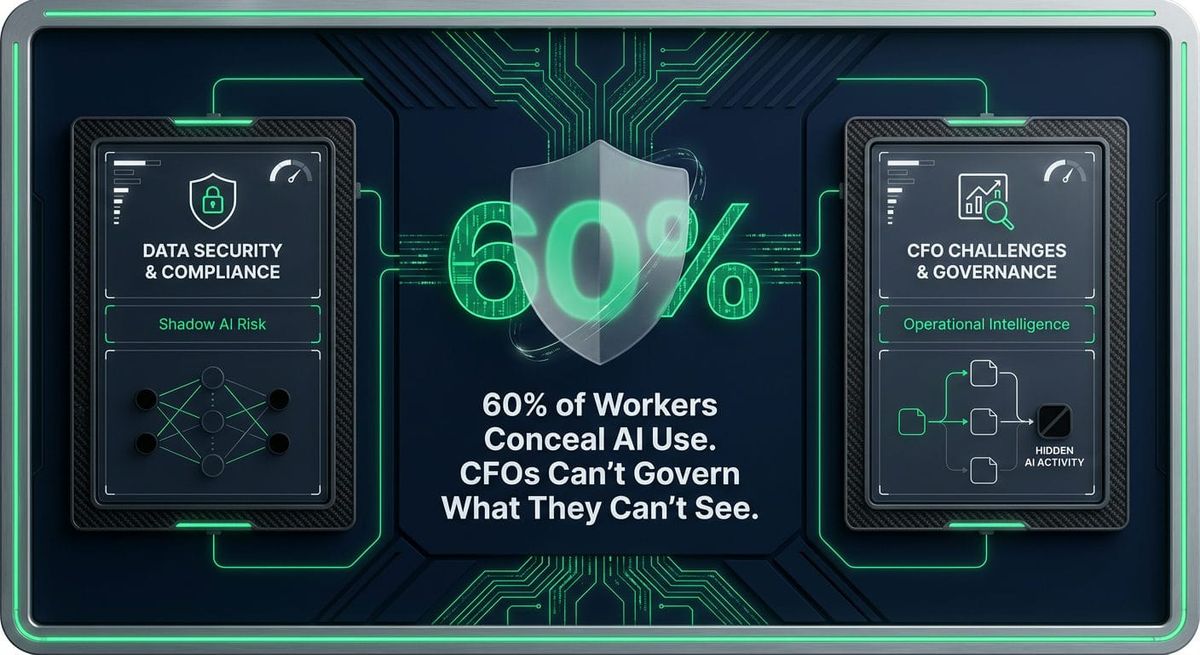
60% of workers conceal their AI use, with 48% admitting to breaching company policy by inputting sensitive data into public AI tools. (Bruce Mullan on GrowCFO Show)
→ The Operator's Take: You can't govern what you can't see. Operators need to implement clear AI usage policies, provide sanctioned tools, and educate employees on data privacy risks immediately to avoid potential compliance disasters and intellectual property leaks.
② Proximity to market and natural resources are reshaping Latin American supply chains.
Latin America is evolving towards long-term relationships, leveraging its closeness to the US, abundant food, energy, and minerals, as well as a growing base of value-added production. (Jorge Bayona on Supply Chain Now)
→ The Operator's Take: Nearshoring and friend-shoring are more than buzzwords; they represent a fundamental shift in global supply chain strategy. Look for opportunities to de-risk sourcing and manufacturing by investing in Latin American partnerships, but understand country-specific nuances like a unique "right to play" vs. "right to win" assessment for each market.
③ AI is drastically lowering the bar for cyberattacks, making manufacturers prime targets.
Manufacturing has been the most targeted industry for cyberattacks for five consecutive years, and the barrier to entry for ransomware gangs has dropped significantly, with new affiliates getting 90% of the ransom. (Andrew Alston on Supply Chain Now)
→ The Operator's Take: Cybersecurity is no longer just an IT problem; it's an operational resilience issue. Investing in advanced threat detection and incident response for your manufacturing and supply chain infrastructure is critical, as traditional patching strategies can't keep pace with the speed of new exploits. Ensure your third-party vendor vetting includes robust cybersecurity audits beyond compliance checklists.
④ Supply availability now trumps cost as the primary design input for electronics.
Engineers prioritize supply availability and lead time (59%) over cost when choosing parts, marking a fundamental shift in product design strategy. (Justin Sears on Supply Chain Now)
→ The Operator's Take: The "shift-left" approach to supply chain considerations is imperative for hardware. Involve procurement and supply chain teams much earlier in the product design process to avoid costly delays and re-designs caused by unavailable or fraudulently sourced components. A $0.05 MLCC can halt a $30,000 GPU shipment.
⑤ Successful enterprise AI adoption hinges on model-agnostic platforms and robust change management.
Zoetis achieved 95% AI adoption with a platform supporting 10-11 different LLMs and a 350-person Change Champion Network, acknowledging that early failures stemmed from underestimating stakeholder involvement. (Keith Sarbaugh on Technovation with Peter High)
→ The Operator's Take: Don't chase the latest LLM; build a flexible, model-agnostic AI infrastructure. More importantly, prioritize change management and user enablement. Get champions on board early, equip them with resources, and deeply understand user needs to drive adoption, not just pilot programs.
⑥ Cash sweeps and asset auctions are the harsh realities of bankruptcy.
Lenders can sweep company cash without extensive prior warning, leading to immediate layoffs and frantic liquidation, with the Chapter 11 process culminating in competitive live asset auctions. (Heidi Robinson on Run the Numbers)
→ The Operator's Take: Maintain strong cash forecasting and liquidity management. Understand your credit agreements intimately, especially covenants and trigger events. In distressed scenarios, be prepared for the worst; the legal ecosystem around Chapter 11 is complex and expensive, requiring expertise like restructuring boards and financial advisors.
Signal Board
🔥 HEATING UP
• AI-driven efficiency: Hippo Insurance's CFO, Guy Zeltser, reports AI handles over 80% of initial loss notifications, making claims adjusters 50% more efficient, enabling 5x revenue growth without significant headcount increase. (Guy Zeltser on CFO THOUGHT LEADER)
• Latin American supply chain maturation: The region is moving towards longer-term relationships and leveraging its strategic proximity to the US, abundant resources, and increasing value-added production. (Jorge Bayona on Supply Chain Now)
• CFO as strategic partner: Finance leaders are moving beyond just numbers, focusing on storytelling, people management, and driving data-driven, conviction-based decision-making for growth and risk. (Guy Zeltser on CFO THOUGHT LEADER; Perry Beberman on CFO THOUGHT LEADER)
👀 ON WATCH
• 🆕 Shadow AI: 60% of employees conceal AI tool usage, with 48% breaching policy by inputting sensitive data into public tools, creating significant governance and security risks. (Bruce Mullan on GrowCFO Show)
• 🆕 Stalking horse bidder: A critical component of Chapter 11 asset auctions, where an initial bidder sets a floor for bids, influencing the competitive landscape. (Heidi Robinson on Run the Numbers)
• 🆕 Technology skills gap in AI, cloud, and cybersecurity projects: Over 80% of AI projects fail due to a lack of experienced talent, highlighting a critical bottleneck for innovation and defense. (Andrew Alston on Supply Chain Now)
• 🆕 Healthy Tension: Disagreements between revenue, credit, and finance teams are essential for robust decision-making, leading to better outcomes than unchallenged consensus. (Perry Beberman on CFO THOUGHT LEADER)
🧊 COOLING OFF
• Growth at all costs: Companies are deliberately shrinking portions of their business, like Hippo Insurance reducing homeowner premiums by 30%, to rebalance risk and achieve profitability over pure expansion. (Guy Zeltser on CFO THOUGHT LEADER)
• Humanoid robotics hype: Skepticism exists regarding the practical application of humanoid robots in manufacturing, with current form factors viewed as impractical and unsafe for industrial or consumer use. (Lior Susan on Technovation with Peter High)
• AI in creative mediums like podcasting is detrimental: While economically viable for generating vast content, AI-generated podcasts raise concerns about market dilution and listener preference for human-created content. (Janine Wright on Freakonomics Radio)
The Bottom Line
Profitability, not just growth, is the new North Star, demanding ruthless operational efficiency and a sharp eye on how emerging tech like AI both unlocks and endangers your business.
Quick Appendix
CFO 4.0 - The Future of Finance: "290. CFO Revisited | The Unconventional CFO with Jeremy Foster" · 41 min · Featuring Jeremy Foster ▶ Listen
Recommended For: CFOs and aspiring finance leaders looking to shift from traditional cost control to strategic resource allocation and growth enablement.
Cybersecurity Headlines: "The Department of Know: South Korean bank hacks, agents target Wikipedia, ransomware recovery fraud" · 33 min · Featuring Rich Stroffolino ▶ Listen · Apple Podcasts
Recommended For: CISOs, security leaders, and IT ops managers grappling with the evolving threat landscape, especially AI-driven attacks and ransomware recovery ethics.
Supply Chain Now: "Apex's Jorge Bayona on Building a Supply Chain Strategy for Latin America" · 65 min · Featuring Jorge Bayona ▶ Listen · Apple Podcasts
Recommended For: Supply chain executives, procurement leaders, and CEOs considering Latin American expansion and nearshoring strategies.
CFO THOUGHT LEADER: "1220: At Hippo, Growth and Risk Work Together | Guy Zeltser, CFO, Hippo Insurance" · 47 min · Featuring Guy Zeltser ▶ Listen · Apple Podcasts
Recommended For: Finance leaders navigating high-growth environments, managing risk, and leveraging AI for operational efficiency and profitability pivots.
GrowCFO Show: "#305 What CFOs Need to Know Before Scaling AI Bruce Mullan Managing Partner, AI Governance Partners" · 45 min · Featuring Kevin Appleby ▶ Listen · Apple Podcasts
Recommended For: CFOs, compliance officers, and IT leaders building or scaling AI initiatives, particularly concerned with data governance and "shadow AI" risks.
Supply Chain Now: "Got Chips? Managing Your Electronic Component Supply Chain Risk in the Face of Global Instability" · 60 min · Featuring Scott Luton ▶ Listen · Apple Podcasts
Recommended For: Manufacturing and product development leaders, procurement teams, and supply chain strategists managing component shortages and design-for-supply challenges.
Technovation with Peter High (CIO, CTO, CDO, CXO Interviews): "95% AI Adoption: How Zoetis Built a Model-Agnostic Platform That Stuck" · 32 min · Featuring Keith Sarbaugh ▶ Listen · Apple Podcasts
Recommended For: Digital and technology leaders (CDTO, CIO, CTO) responsible for driving enterprise-wide AI adoption and effective change management.
Technovation with Peter High (CIO, CTO, CDO, CXO Interviews): "Lior Susan on Why Now Is the Time to Build Industrial Giants" · 27 min · Featuring Lior Susan ▶ Listen · Apple Podcasts
Recommended For: CEOs, investors, and operations leaders interested in domestic manufacturing, industrial tech, and the role of AI and robotics in physical industries.
Freakonomics Radio: "690. It’s Show Business, Baby!" · 62 min · Featuring Stephen Dubner ▶ Listen · Apple Podcasts
Recommended For: Media executives, content strategists, and anyone interested in the economics of digital content and the impact of AI on creative industries.
Supply Chain Now: "The Buzz: AI, Cybersecurity, and the New Risks Reshaping Supply Chain" · 54 min · Featuring Scott Luton ▶ Listen · Apple Podcasts
Recommended For: Supply chain, IT, and risk management professionals addressing the convergence of AI, cybersecurity, and industrial policy in global operations.
Run the Numbers: "Inside the Food52 Bankruptcy | Heidi Robinson" · 48 min · Featuring Heidi Robinson ▶ Listen · Apple Podcasts
Recommended For: CFOs, COOs, and private equity operating partners seeking a raw, firsthand account of navigating corporate distress, Chapter 11 bankruptcy, and asset liquidation.
CFO THOUGHT LEADER: "1221: Rebuilding Bread Financial’s Capital Foundation—And What It Made Possible | Perry Beberman, CFO, Bread Financial" · 48 min · Featuring Perry Beberman ▶ Listen · Apple Podcasts
Recommended For: CFOs and finance executives focused on balance sheet transformation, capital foundation, and strategic AI adoption for decision-making and risk management.
Topics