PodStreet Weekly
 Velocity Meter
 CX-O
CX-O Cult of Brands
 Growth Glider
 Dear Brain
US Regulates AI, but China Changes the Global Map
China's flood of low-cost, open-source AI models is challenging US dominance and forcing a global realignment.
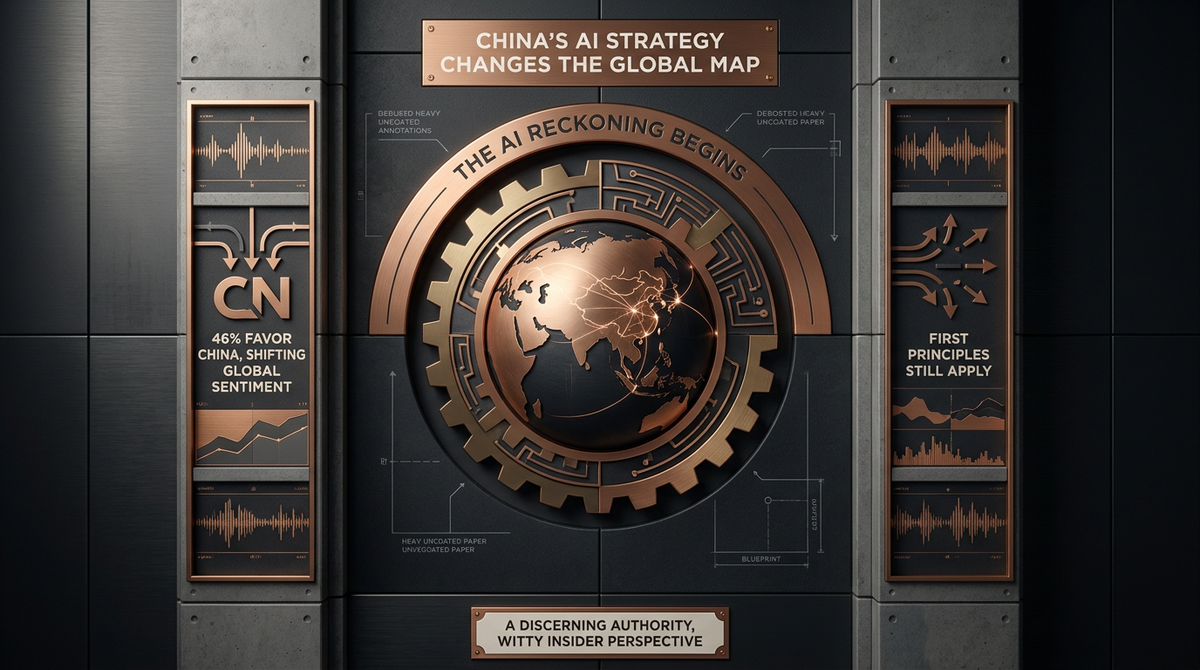
China's AI Strategy Changes the Global Map
A flood of low-cost, open-source models from China is challenging US dominance and forcing a global realignment. This isn't just a tech race; it has immediate geopolitical consequences, shifting public opinion and threatening to upend energy markets. The U.S. is responding with regulation, but China's play is already changing the calculus for international influence.
Featured Episodes
- The Fight Over Open Source AI, Anthropic's $1.5B Payout, NYC Socialists: Evictions = Violence? from All-In with Chamath, Jason, Sacks & Friedberg
- MacroVoices #542 Luke Gromen: As The Conflict Turns from Macro Voices
- AI Spending Spooks the Market from Bloomberg Surveillance
- Inside the Model Factory — Eiso Kant, Poolside AI from Latent Space: The AI Engineer Podcast
The AI Reckoning Begins
The hype cycle has ended, and the hard work of making AI pay has begun. Across sales, marketing, and finance, leaders are moving from adoption to governance, realizing AI is less a new tool and more a harsh spotlight on existing gaps. The focus is shifting from what AI can do to what it demands of the organization, from tool consolidation to mandatory AI literacy.
Featured Episodes
- Travis Kalanick Is Back | Building the Future of Industrial AI from The a16z Show
- MERGE CEO Stephanie Trunzo on keeping essential human elements during your AI transformation from The Agile Brand with Greg Kihlström®: Expert Mode Marketing Technology, AI, & CX
- SaaStr 870: The Agents #11 - From 0 to 20 and Back Again. Are Our AI Agents Finally Consolidating? from The Official SaaStr Podcast: SaaS | Founders | Investors
- The Four Stages of World-Class FP&A with Datadog’s AJ Ljubich from Run the Numbers
- Rethinking Demand Gen When the Funnel Starts Earlier from Sales Pipeline Radio
- Anthropic’s Felix Rieseberg: why AI wins a Nobel before a Pulitzer from Summation (formerly World of DaaS)
- THE SECRETS TO CLOSING ENTERPRISE DEALS from The Brutal Truth about Sales and Selling - We interview the world's best B2B Enterprise salespeople.
First Principles Still Apply
While technology dominates the conversation, fundamentals haven't been repealed. In commerce, radical customer empowerment builds loyalty that AI can't replicate. And in science, the biggest breakthroughs still come from questioning the very nature of 'ordinary' human understanding.
Featured Episodes
- Tim Maudlin: Quantum Mechanics Explained FROM SCRATCH from Theories of Everything with Curt Jaimungal
- Ep. 264 | Matt Meeker: 800 Prices, One Promise: What BARK Pays to Reward Loyalty from Customer Confidential: Untold Stories of Earned Growth
|
A Note from Chris
I couldn't shake one thought listening this week: the abstract debate over AI is officially over. On one side, you have operators like Travis Kalanick on The a16z Show focused on the brutal, real-world work of building a “Physical AI Stack.” On the other, there’s a massive geopolitical chess match playing out, as China floods the market with low-cost models.
The conversation has split into two very real fronts, one fought in factories and the other in global markets. It's a stark reminder that the fallout is happening on every scale at once. Here's what we heard.
Chris Dessi
The Through-Line
The abstract debate about AI is over. Across the network this week, the conversation converged on a single, urgent through-line: China's strategy of flooding the global market with low-cost, open-source models is fundamentally changing the geopolitical map and forcing an immediate reckoning inside US companies.
The first tremors were felt on All-In with Chamath, Jason, Sacks & Friedberg, where the hosts broke down how China is challenging US tech dominance not with a single superior model, but with a wave of accessible, powerful AI. As tracked in Velocity Meter’s “PE Brief: Strategy & Growth Stage Intelligence,” this isn’t just a threat to companies like Anthropic and OpenAI. It is a deliberate, state-backed play to win influence by making powerful AI a global commodity, a move the US is attempting to counter with regulation that may already be too late.
That play for influence is already registering. The CEO & Leadership Brief from CX-O connected this technological shift to startling new Pew Polling data showing a significant turn in global sentiment, with 46% of respondents in some nations now favoring China over the US. The soft power of technology is creating hard geopolitical realities. On The Prof G Pod with Scott Galloway, The Atlantic's Derek Thompson discussed this wider "Anti-Social Century," exploring how such technological and social disruptions are fraying old alliances and forcing leaders to reassess their global standing.
This external pressure is forcing an internal reckoning for American operators. The sudden availability of cheap AI tools isn't a magic wand; it's a harsh spotlight on every existing flaw in strategy, tech, and talent. As the full breakdown ran on Cult of Brands, the conversation has moved from adoption to damage control.
Their "Demand & Growth Brief" summarized the new reality facing every leader:
AI isn't creating new gaps, it's exposing every weak point in your strategy, your tech stack, and your team's quality bar.
This is the heart of the matter. On The Agile Brand with Greg Kihlström®, MERGE CEO Stephanie Trunzo argued that survival depends on keeping essential human elements at the center of this transformation. The challenge is no longer theoretical. It is a mandate to harden every process, clarify every strategy, and upskill every team, because your competitors now have access to tools that will exploit every weakness you have.
But the race is already escalating beyond software. The immense physical infrastructure and energy required to power these models is becoming the next front in this global competition. The fight for dominance isn't just happening in the cloud; it's happening on the power grid, and that will define the winners and losers of the next decade.
Heard in Three Rooms
The AI Reckoning Begins
The abstract debate around AI is over. This week, a single, pragmatic conclusion surfaced in publications that rarely overlap: AI's greatest immediate value isn't magic, but its ruthless ability to expose every existing flaw in a company’s strategy, tech, and talent.
This same realization echoed across the halls of marketing, sales, and finance, showing up in Cult of Brands, Growth Glider, and CX-O.
- In the marketing world, MERGE CEO Stephanie Trunzo argued on The Agile Brand with Greg Kihlström® that AI doesn't create gaps, it reveals them, forcing a confrontation with weak points in your strategy and stack.
- From the sales and GTM perspective, The Official SaaStr Podcast explored how AI agents are forcing a painful but necessary consolidation of redundant tools, moving the discussion from adoption to optimization.
- And from the C-suite, the finance brief noted the pressure on CFOs to look past the hype, with Run the Numbers discussing how FP&A teams must now act as strategic orchestrators of value, not just scorekeepers.
When leaders in three different functions independently conclude that AI's first job is to serve as a harsh organizational audit, it marks the definitive end of the hype cycle. The real work has begun.
The Tracker
While some themes dominate a single week, others show trajectory. Here are the signals gathering momentum across the network.
AI as the Great Unifier (of Problems)
Newly on the radar (Week 1).The read: The era of AI tourism is over. Leaders are discovering that AI’s primary function is to act as a harsh spotlight, exposing every pre-existing weakness in a company’s strategy, tech stack, and talent.The point was made concisely by MERGE CEO Stephanie Trunzo on The Agile Brand with Greg Kihlström®, arguing that leaders must keep essential human elements during the transformation because AI reveals gaps, it doesn't create them.
China's Geopolitical AI Play
Newly on the radar (Week 1).The read: This is no longer just a tech race. The flood of low-cost Chinese models is an economic and diplomatic maneuver with immediate consequences for energy costs, global supply chains, and public opinion.The conversation on All-In with Chamath, Jason, Sacks & Friedberg zeroed in on the strategic implications of China’s open-source push versus the US regulatory response in “The Fight Over Open Source AI.”
The full tracker — every theme, eight weeks back — lives in PodStreet Pro.
|
Press Play
If you only have time for a few, start here. These are the episodes that tie the week's themes together and are worth a full listen.
All-In with Chamath, Jason, Sacks & Friedberg
The Fight Over Open Source AI, Anthropic's $1.5B Payout, NYC Socialists: Evictions = Violence?
For anyone trying to understand the geopolitical chess match as China uses low-cost, open-source models to challenge US tech dominance.
The a16z Show
Travis Kalanick Is Back | Building the Future of Industrial AI
This is essential for investors and founders looking past model hype to the trillion-dollar opportunity in physically embedding AI into the real world.
Customer Confidential: Untold Stories of Earned Growth
Ep. 264 | Matt Meeker: 800 Prices, One Promise: What BARK Pays to Reward Loyalty
For DTC operators and brand leaders, this is a masterclass in how radical customer empowerment can build loyalty that no algorithm can replicate.
For You
Key signals for your role, based on this week’s episodes.
If you're a Founder → The race has moved from software to hardware, and Travis Kalanick is back to prove it. His new venture, Atoms, is betting on industrial AI to deliver a 40% productivity lift, a signal that the next wave of value creation will be in physical, real-world applications as he explained on The a16z Show.
If you're an Operator → Stop treating AI as a magic wand and start using it as a diagnostic tool for your existing stack. As MERGE CEO Stephanie Trunzo said on The Agile Brand, AI doesn't create gaps, it exposes them, and the burden of architecting a coherent strategy is falling squarely on Revenue Operations teams.
If you're an Investor → China’s strategy of flooding the market with low-cost open-source models is a direct threat to the moats of US incumbents and is forcing a global realignment. This isn't just a tech risk; on Macro Voices, Luke Gromen connects these geopolitical maneuvers to a potential oil shock that could send prices to $200 a barrel.
If you're a Builder → The conversation has shifted from raw scale to data quality and specialization. As heard on Latent Space, the new frontier is building specialized "model factories" for specific domains, which means the most valuable work is now in curating causal data, not just building another generalist tool.
The Rewind
The skimmer's index — for the reader who only reads the bottom. A clean list of the episodes referenced this week.
- • Theories of Everything with Curt Jaimungal — Tim Maudlin: Quantum Mechanics Explained FROM SCRATCH. Listen →
- • The a16z Show — Travis Kalanick: Building the Future of Industrial AI. Listen →
- • The Prof G Pod with Scott Galloway — Derek Thompson: Inside the Anti-Social Century. Listen →
- • The Agile Brand with Greg Kihlström® — Stephanie Trunzo: Keeping essential human elements during your AI transformation. Listen →
- • The Official SaaStr Podcast — Jason Lemkin: Are Our AI Agents Finally Consolidating? Listen →
- • CFO THOUGHT LEADER — Jack McCullough: The Credibility Playbook: How CFOs Restore Belief. Listen →
- • All-In with Chamath, Jason, Sacks & Friedberg — Chamath Palihapitiya: The Fight Over Open Source AI. Listen →
- • Customer Confidential: Untold Stories of Earned Growth — Matt Meeker: What BARK Pays to Reward Loyalty. Listen →
Don't let the algorithms decide what you hear next. Get Chris Dessi's curated listening guide, delivered weekly, directly to your inbox.
Subscribe to The Weekly Roundup →
This week shows AI isn't a magic wand; it's a diagnostic tool that ruthlessly exposes every flaw in strategy, tech, and team execution.
Forward to a friend → · Share on X
Topics